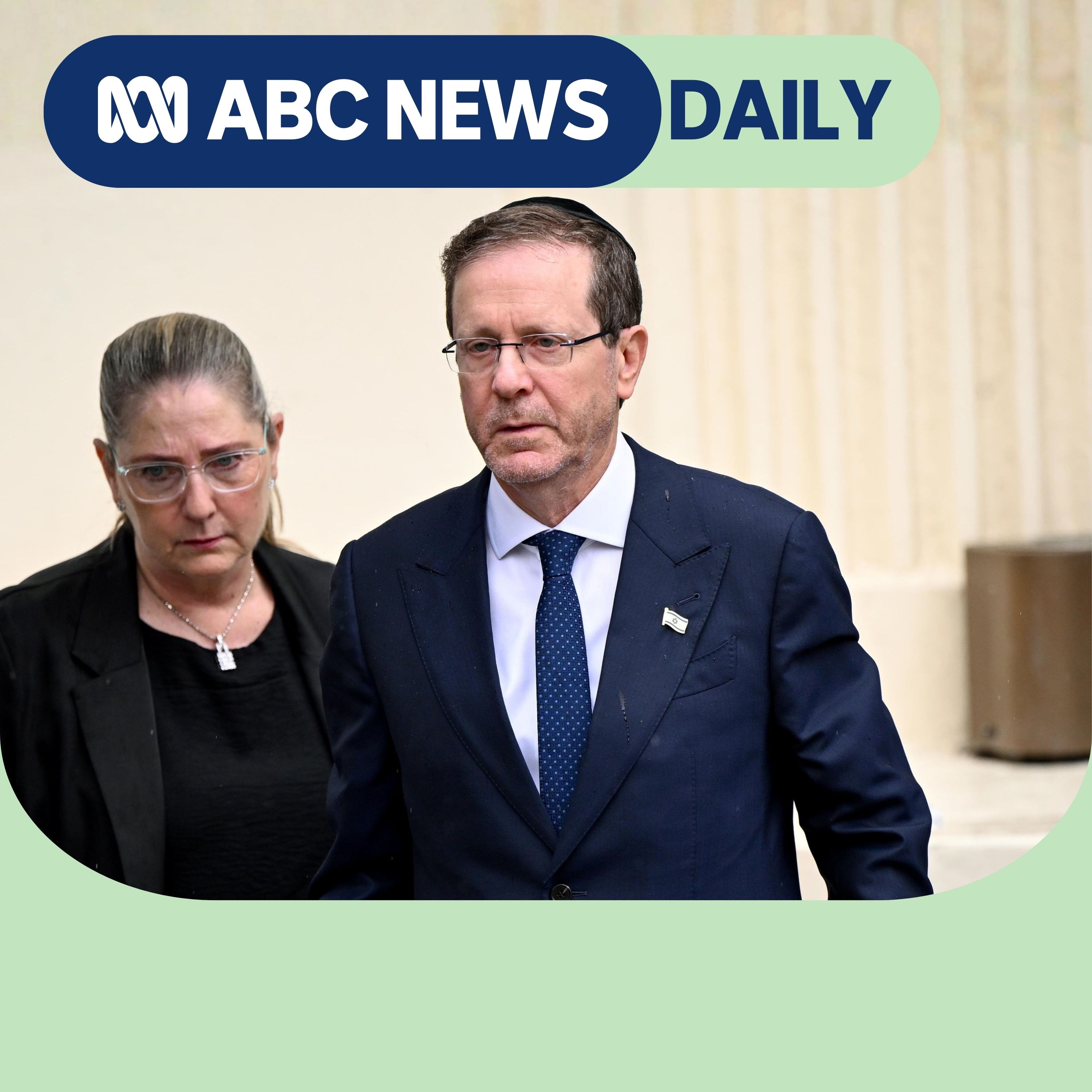
Overview of Laura Tingle on the Israeli president’s divisive visit
This ABC News Daily episode (host Sam Hawley) features Global Affairs Editor Laura Tingle discussing the controversy around Israeli President Isaac Herzog’s visit to Sydney after the Bondi terrorist attack. The conversation covers why Prime Minister Anthony Albanese invited Herzog, the backlash tied to Israel’s actions in Gaza and an ongoing International Court of Justice (ICJ) case, divisions within the Australian Jewish community, legal calls to arrest Herzog, and NSW government measures to restrict street protests during the visit.
Key points and takeaways
- Purpose of the visit: Albanese invited President Herzog to show solidarity with the Jewish community after the Bondi attack; many Jewish families and survivors welcomed that support.
- Major source of controversy: The visit coincides with international scrutiny of Israel (ICJ genocide proceedings and a UN inquiry), and statements and actions by Herzog (including signing a bomb bound for Gaza, according to critics) that some say amount to incitement.
- Calls for arrest: Activists and human rights lawyer Chris Sidoti (a member of last year’s UN inquiry) argue incitement could be an arrestable offence under Australian and international law. Practical arrest is unlikely because Herzog is a head of state and not charged.
- Divisions within the Jewish community: The peak body (Executive Council of Australian Jewry) supports the visit for communal solidarity; other Jewish groups (e.g., the Jewish Council and a 1,000-signatory ad) oppose Herzog representing their views or linking Israeli policy to Jewish safety in Australia.
- Protest restrictions: NSW Premier Chris Minns used special powers (normally for major events) to ban street marches over a broad area; protests in parks remain possible but marchers risk arrest if they block roads. This raises free-speech and policing concerns.
- Wider policy dilemma: The episode frames a broader Australian dilemma—how to separate opposition to antisemitism from criticism of Israeli government actions, and how to recalibrate foreign policy after Australia formally recognized Palestine.
Topics discussed
- Background: Bondi terrorist attack and decision to invite Herzog.
- ICJ/UN context: Ongoing genocide-related proceedings and findings from the UN Commission of Inquiry about incitement.
- Herzog’s remarks: His comments suggesting collective Palestinian responsibility for October 7 and his defense that remarks were taken out of context.
- Domestic politics: Discomfort from Labor MP Ed Husic and the political calculus for the Albanese government.
- Legal/policing measures: Chris Sidoti’s argument for arrest; head-of-state immunity; NSW’s special protest powers and policing rationale.
- Community impact: How the visit affects Jewish survivors, communal safety, and social cohesion between Jewish and pro-Palestinian communities.
Notable quotes
- Protester: “This is a man who has incited genocide in Gaza.”
- Herzog (quoted): “It is an entire nation out there that is responsible… They could have risen up. They could have fought against that evil regime…”
- Laura Tingle summarising political reaction: “I am concerned that a figure like that doesn't necessarily enhance social cohesion.”
Legal and political context (brief)
- ICJ case and UN inquiry: International processes are examining allegations of genocide and possible incitement related to Israeli actions in Gaza.
- Incitement as a crime: Chris Sidoti argues incitement could be prosecuted under Australian and international law, but practical legal barriers exist.
- Head-of-state immunity: Visiting heads of state generally have immunity from arrest, making prosecution while in Australia unlikely.
- Domestic policy challenge: Australia must balance countering antisemitism with managing public criticism of Israeli policy and protecting protest rights.
Implications and why it matters
- Community safety vs political symbolism: The visit was meant to comfort victims but risks conflating Israeli state actions with Jewish identity in Australia, potentially increasing tensions.
- Protest rights and policing: Use of special powers to limit marches raises questions about free speech, proportionality, and policing tactics during politically fraught visits.
- Foreign policy and domestic politics: The episode highlights pressure on the federal government to navigate international law, human-rights concerns, and domestic multicultural cohesion.
- Longer-term debate: The situation intensifies discussion about how Australia will recalibrate its relations with Israel and Palestine while addressing antisemitism and community divisions at home.
Bottom line
Laura Tingle frames Herzog’s visit as a well-intentioned act of solidarity that has become politically combustible because of the broader context of alleged abuses in Gaza, disputed statements by Herzog, legal arguments about incitement, and competing priorities: protecting survivors and combating antisemitism, preserving free expression, and managing international and domestic law and politics.