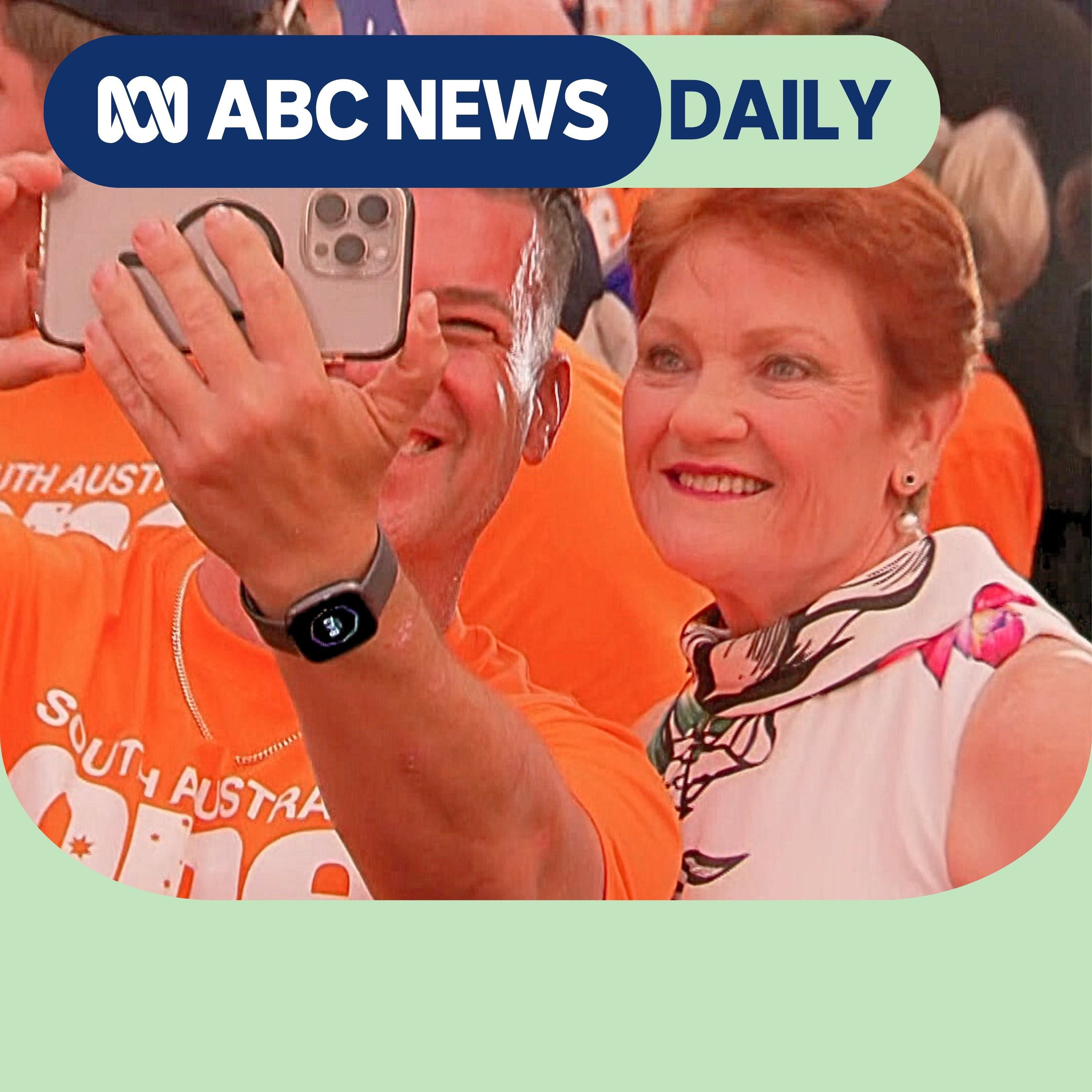
Overview of "Is this the start of Pauline Hanson’s 'orange wave'?"
This episode of ABC News Daily (hosted by Sam Hawley) features political correspondent and AM host Melissa (Mel) Clark discussing One Nation’s surge in the 2026 South Australian state election. The conversation covers election results and statistics, where One Nation succeeded, how the party should be characterised, why voters are switching, and what the rise of One Nation might mean for upcoming federal contests and the major parties.
Key points and takeaways
- One Nation recorded its best-ever showing in South Australia: roughly one in five voters put One Nation first (about 20% statewide).
- In many contests One Nation is finishing as the main challenger—placing in the top two in around half of state seats.
- One Nation appears to have gained at least one lower‑house seat and is projected to win two (possibly three) seats in the upper house.
- The party’s success reflects both dissatisfaction with major parties and improved party organisation behind the scenes.
- The rise of One Nation complicates the usual two‑party dynamics and is likely to influence federal contests, including the upcoming by‑election in the seat of Farrer.
- Short term, One Nation’s vote surge is also helping Labor electorally by weakening the Liberals in some areas; longer term it poses a direct challenge to both major parties.
Detailed breakdown
South Australia results and local examples
- Labor (Premier Peter Malinauskas) achieved a decisive statewide victory — projected to hold at least 32 of 47 lower‑house seats — and Malinauskas framed the result as an "invitation" to keep working hard rather than unqualified adulation.
- One Nation won a historic share of first‑preference votes statewide and is the primary challenger in many formerly safe seats.
- Example seats discussed:
- Elizabeth (a longtime Labor, working‑class seat around the old Holden plant): ALP primary ~41.5% vs One Nation ~32.6% — showing One Nation has become a credible threat even in traditional Labor suburbs.
- Chaffey (Murray River irrigation region): very large swings — transcript referenced ~19% swing away from the Liberals and ~24% swing to One Nation — illustrating strong rural/regional movement toward One Nation over issues like water policy and cost of living.
One Nation’s positioning and comparison to overseas movements
- One Nation is best described as a right‑wing populist party focusing on immigration, national identity, and appeals to communities affected by globalization and technological change.
- Comparable in themes to parties led by figures like Nigel Farage (UK) or Marine Le Pen (France), though historically Hanson has struggled to build broad organisational depth. Recent changes to the party’s machinery appear to have made it more effective electorally.
Drivers of the shift to One Nation
- Voter frustration with the "narrow" consensus between major parties: for many voters, switching between Labor and the Coalition no longer feels like transformational change.
- One Nation’s long‑standing, consistent messaging gives it perceived authenticity for voters seeking an alternative.
- Local issues — cost of living, fuel prices, water buybacks (in irrigation communities) — have amplified One Nation’s appeal.
- Organizational improvements within One Nation have turned polling support into real ballot box results.
Implications for federal politics
- Short-term: the SA outcome is a warning sign for both major parties. It particularly threatens the Liberals (by losing traditional voters) but can indirectly help Labor where it weakens the Liberals.
- The upcoming by‑election in Farrer (vacated by a former Coalition MP) is flagged as an important test of whether these SA swings replicate elsewhere. Polling suggests One Nation support is rising there too, though strong local independents and strategic decisions by Labor (Labour/Labor staying out of the contest) complicate predictions.
- Economic pressures ahead (energy/oil shocks, recession risk) will be big tests for the federal government; poor management of these could further boost minor parties and independents at the 2028 federal election.
Notable quotes
- Melanie Clark (paraphrase): One Nation is “a growing force” and the SA results show polling support translates to real votes.
- Peter Malinauskas (paraphrase): This strong result “is an invitation” to continue working for voters — and he urged “patriotism, but not rash nationalism.”
- Pauline Hanson (paraphrase, from the transcript): “This is just the start” — framing the success as the beginning of a larger movement.
What to watch next
- Results of the Farrer by‑election and whether One Nation can replicate SA swings in a federal context.
- Whether One Nation converts high primary votes into more lower‑house seats beyond isolated wins.
- How major parties respond: policy shifts, messaging on national identity and local economic issues, and organisational changes to reclaim disaffected voters.
- Economic indicators (fuel/oil prices, recession signs): worsening conditions could accelerate minor‑party gains.
Bottom line
One Nation’s South Australian surge is more than a polling blip: it reflects growing voter dissatisfaction with mainstream parties, local economic grievances, and improved party organisation. The trend complicates Australia’s traditional two‑party dynamics and will be an important factor to monitor ahead of federal contests, especially the Farrer by‑election and the 2028 federal election.