Overview of "Is it time to rethink flying with Gulf airlines?"
This ABC News Daily episode (host Sam Hawley) examines the disruption to air travel caused by recent attacks in the Middle East that have shut down or reduced operations at major Gulf hubs (notably Dubai and Doha). Aviation lecturer Ian Douglas explains why Gulf carriers became dominant, how airlines assess safety and reroute flights, the global ripple effects of the shutdowns, and practical advice for Australian travellers deciding whether to book or change trips that route via the Gulf.
Key points and main takeaways
- The recent Middle East conflict has led to massive disruption: more than 20,000 flights were cancelled across the region and thousands of passengers (including many Australians) have been stranded in Gulf hubs.
- This is arguably the first time in modern aviation that major global hub disruption has affected such large volumes of international travel at once.
- Primary immediate risks are attacks on airports and ground infrastructure (drones hitting fuel tanks, fires on tarmacs); in-flight drone attacks are considered less likely for high-altitude large jets.
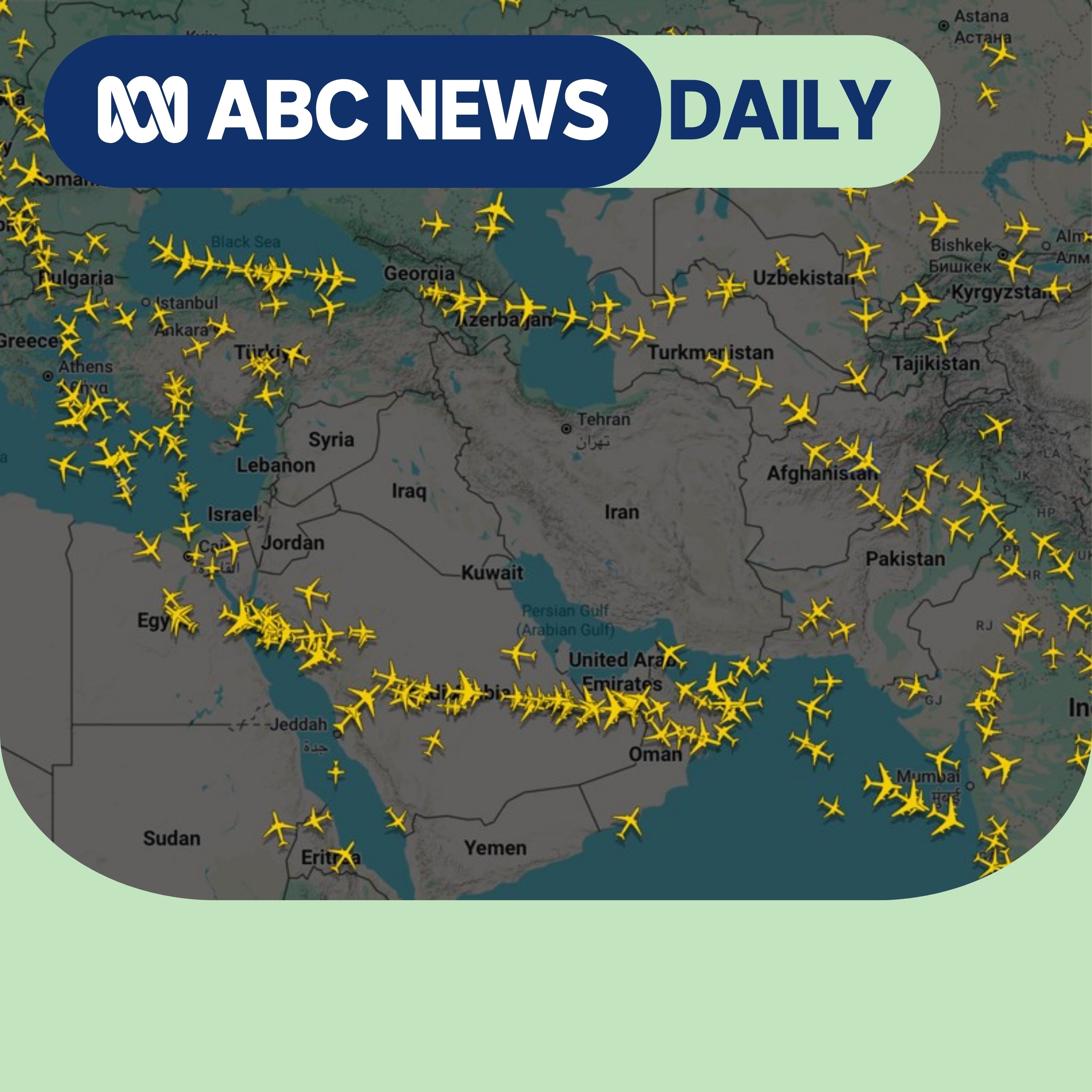
- Airlines are rerouting flights around the conflict zone, producing very busy alternative corridors (north of Iran/Turkey, south of Russia/Ukraine) and a “hole” where Gulf airspace would normally be used.
- Gulf carriers are likely to suffer reputational damage and short‑term revenue loss; other carriers (Turkish Airlines, Cathay Pacific, Singapore Airlines, etc.) stand to gain market share while the Gulf disruption continues.
- Airfares on alternative Asia-based routes have already risen (hundreds of dollars in economy; thousands in business), and price volatility is expected until capacity and confidence rebalance.
- Practical consumer advice: if you already have a booking, monitor developments and hold; if travel is essential, consider alternate routings through Asia or Turkey and buy flexible options.
Why Gulf airlines became dominant
Ian Douglas summarized three structural reasons for the Gulf hubs’ rise:
- Aircraft capability: modern long-range jets can fly almost anywhere from Gulf hubs, allowing one-stop connections.
- Geography: the Gulf sits centrally on many Europe–Asia/Australia traffic flows.
- Investment: government-backed investment in airports, fleets and frequency created highly competitive hubs over ~30 years.
Commercial partnerships accelerated the shift for Australians (e.g., Qantas–Emirates cooperative arrangements and Virgin’s tie-ups), making Gulf routings common and often cheaper/more convenient than direct or European/Asian connections.
Safety, risk assessment and operational responses
- Airlines prioritize not putting aircraft or passengers at risk; decisions to resume flights are based on up-to-date risk assessments.
- Common operational response: designate and use alternative air routes that avoid conflict airspace rather than fly directly across it.
- Airports and ground attacks (drones hitting fuel tanks, damage to facilities) are the most disruptive and dangerous outcomes — more so than attacking aircraft in flight.
- Past incidents (e.g., MH17 over Ukraine in 2014) changed industry behavior around avoiding contested airspace; the current crisis is different in scale because global travel volumes and hub dependence are much greater now.
Consumer impact and likely timeline
- Disrupted passengers include those mid-journey, outbound and inbound — this will cause messy capacity imbalances for weeks.
- Expect it to take several weeks to a couple of months for networks and passenger flows to normalize once the conflict abates.
- When Gulf carriers resume full services, competitive pricing may be necessary to win passengers back; reputational recovery may take longer.
Practical advice / Travel checklist
If you’re planning travel or already booked via Gulf hubs:
- If already booked: hold the booking and monitor airline / government advisories for 1–2 weeks before making major changes.
- If travel is essential (weddings, medical, business): proactively consider alternative routings (Singapore, Hong Kong, Tokyo, Istanbul, via Asia generally).
- Buy flexible/refundable tickets or add flexible fare options where possible.
- Check travel insurance policies for conflict-related coverage and understand airline rebooking/refund rules.
- Carry essential medication and documents in hand luggage; ensure you have access to at least a few days’ meds if stranded.
- Keep digital and physical copies of tickets, confirmations and emergency contacts; contact airlines promptly about missing checked luggage.
- Expect possible fare increases on alternative routes while demand concentrates on non‑Gulf carriers.
Notable quotes from the episode
- “I don't really think so... this is really the first time that we seen major aviation routes — major aviation hubs — so badly affected and impacted.” — Ian Douglas
- “You need aircraft that are capable of getting pretty much anywhere, … geography that puts you in the middle of all the traffic flows, … and you need investment.” — Ian Douglas (on why Gulf hubs succeeded)
- “If you already got a reservation hold on to it and watch what happens over the next week or two … but if you really have to be somewhere … you may really want to be looking at an alternative way of getting there.” — Ian Douglas
Who spoke / production credits
- Guest: Ian Douglas — lecturer in aviation management, Hong Kong Polytechnic University; honorary senior lecturer, UNSW.
- Host: Sam Hawley.
- Produced by Sydney Pead and Cinnamon Nippard. Audio production by Sam Dunn. Supervising producer: David Cody.
Summary prepared from ABC News Daily episode: “Is it time to rethink flying with Gulf airlines?”