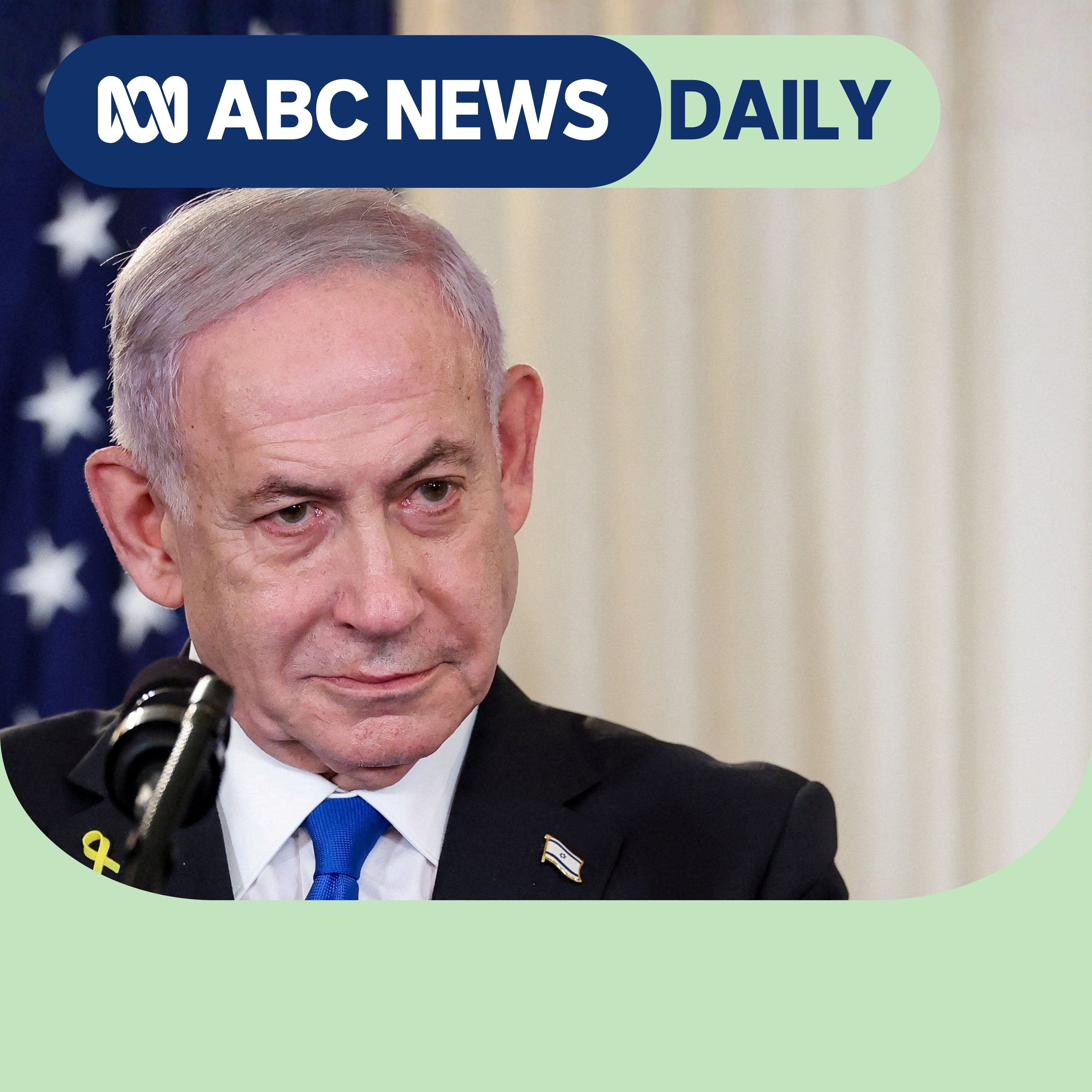
Overview of Is Israel trying to make Iran a failed state?
This episode of ABC News Daily (hosted by Sam Hawley) features Hussein Ibish from the Arab Gulf States Institute discussing recent fallout from the war between the US, Israel and Iran. The conversation focuses on a senior US counter‑terrorism official’s resignation, claims that Israel pressured the United States into a broader campaign against Iran, Israel’s parallel offensive in Lebanon against Hezbollah, and Benjamin Netanyahu’s political and strategic aims — including the possibility that Israel wants regime change or even state failure in Iran.
Key points and main takeaways
- A senior US counter‑terrorism official (named in the episode as Joe Kent) resigned, arguing intelligence did not support an “imminent threat” from Iran and that the US was acting under pressure from Israel.
- Hussein Ibish says Israeli leaders — particularly Benjamin Netanyahu — have long sought a sustained, aggressive campaign against Iran and its regional proxies. He argues Israel may prefer a longer, open‑ended bombardment aimed at degrading or collapsing the Iranian state.
- Israel has expanded military action into Lebanon against Hezbollah. Ibish frames that as a “parallel” but connected conflict: Israel seeks to weaken Iran’s principal proxy in the Arab world.
- Iran’s leadership is institutionally resilient. Even with significant targeted killings (the episode cites the death of a top national security official), Iran has contingency plans for decentralized command and resilient military responses.
- Short‑term tactical gains (degrading Iranian capabilities) could be achieved, but longer‑term risks include radicalization, social collapse, and a possible accelerated push toward nuclear breakout — outcomes that may make the region (and Israel’s security) worse over time.
- Netanyahu has strong domestic political incentives to keep a tough posture (helpful for his re‑election positioning), and the wartime alliance with the US is politically useful for him.
Breakdown of the discussion
US resignation and internal divisions
- The resigning official’s letter claimed:
- Intelligence did not show Iran posed an imminent threat.
- The President was responding to pressure from Israel rather than to direct US national security imperatives.
- This resignation exposes divisions in Trump’s political base (evangelicals, neoconservatives, donors) over following Israel’s agenda.
Israel’s strategic aims
- According to Ibish, Netanyahu aims beyond temporary degradation; he seeks to remove Iran as a threat long‑term — potentially via regime change or by producing state failure.
- Israel may view periodic strikes ("an open‑ended campaign of aerial bombardment") as an acceptable way to achieve sustained pressure.
Lebanon and Hezbollah
- Israel’s strikes and limited troop incursions into Lebanon are intended to weaken Hezbollah, Iran’s most important regional ally.
- Ibish argues Hezbollah is embedded in Lebanese society and cannot easily be “wiped out”; fighting is likely to be protracted and localized.
Iran’s resilience and leadership impact
- The killing of a high‑level Iranian national security official is significant but not necessarily decisive: Iran’s system is designed to operate with disrupted central command through decentralized orders and prepared contingency plans.
- Mass repression of protesters prior to the war suggests the regime already feared internal threats; external attacks often consolidate nationalist sentiment rather than induce overthrow.
Political incentives for Netanyahu
- The war and perceived successes have bolstered Netanyahu’s popularity at home, improving his electoral prospects even if he’s not the first choice for many voters.
- Keeping the US engaged on Israel’s terms provides both strategic and political benefits for his government.
Notable quotes
- “You’ve been hoodwinked by Prime Minister Netanyahu… we’re carrying Israel’s water for them.” — paraphrase of Hussein Ibish’s characterization of the US role.
- “Open‑ended campaign of aerial bombardment against Iran” — summarizing Israel’s potential preferred approach.
- On Trump: “He likes it… it’s a shiny toy. It goes boom.” — Ibish describing presidential attraction to military power while cautioning about political costs of American casualties.
Implications and risks
- Short term: Iran’s military capacity can be degraded, and Israel may score domestic political points.
- Medium/long term: prolonged campaign risks radicalizing Iran, incentivizing clandestine nuclear acceleration, destabilizing neighboring states (notably Lebanon), and increasing US domestic political backlash if American casualties rise.
- Regional escalation is likely given Hezbollah’s embeddedness in Lebanon and Iran’s capacity for decentralized retaliation.
Questions to watch going forward
- Will US policymakers reassert independent objectives or continue aligning closely with Israeli strategy?
- How resilient will Iran’s command structure prove in practice after targeted decapitations?
- Can Israel achieve its strategic aims without triggering deeper regional escalation or a nuclear breakout?
- How will domestic politics in Israel and the US shape the duration and intensity of the campaign?
Credits
- Host: Sam Hawley (ABC News Daily)
- Guest: Hussein Ibish (Arab Gulf States Institute)
- Produced by: Sydney Pead; Audio production: Sam Dunn; Supervising producer: David Cody
Recommended next steps for listeners: follow updates on congressional oversight and official US intelligence assessments, monitor developments in Lebanon/Hezbollah activity, and track Iranian domestic responses to external attacks.