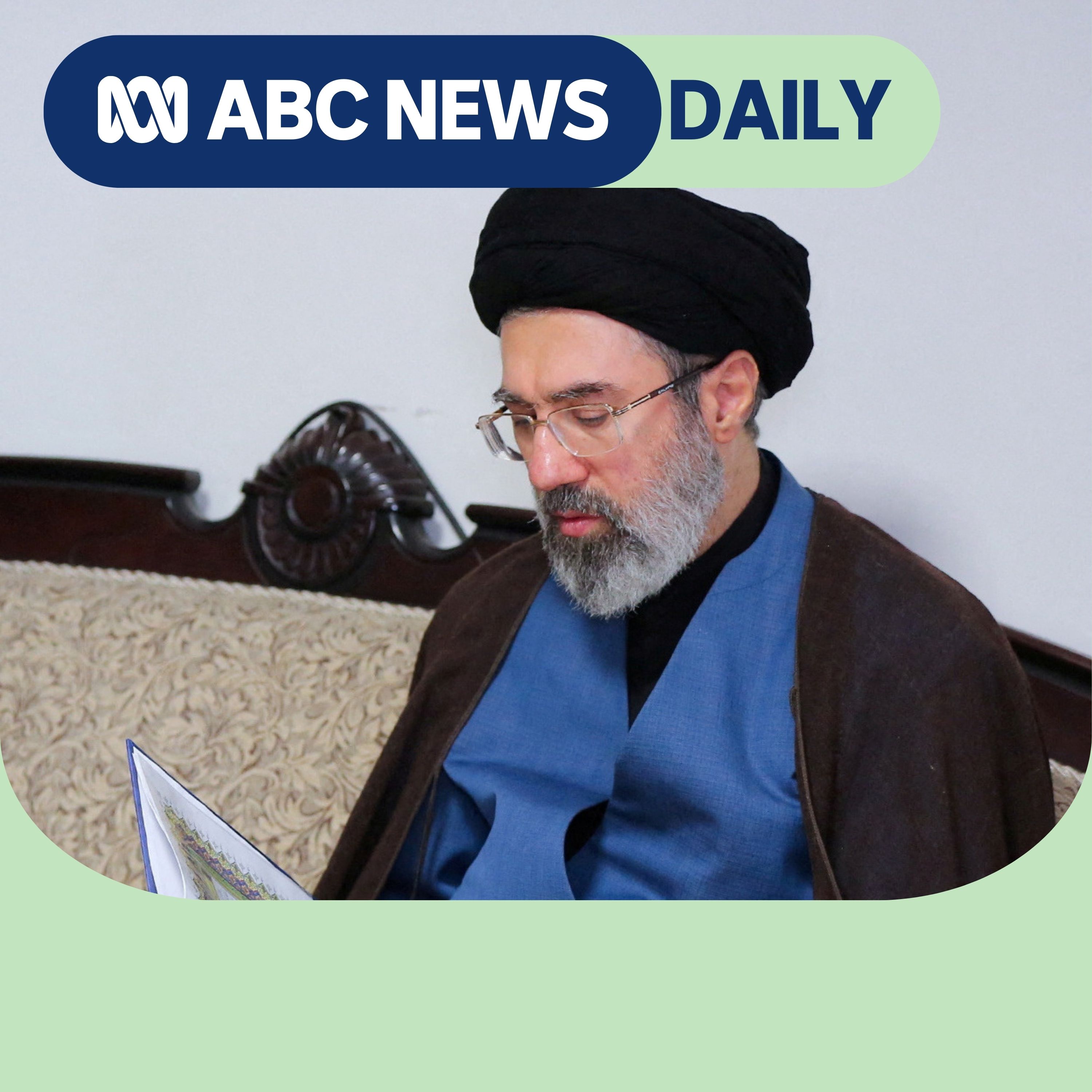
Overview of "Is Iran’s new supreme leader looking for revenge?"
This ABC News Daily episode (host Sam Hawley) features Barbara Slavin, a Stimson Center distinguished fellow, assessing the implications of Iran appointing the son of the assassinated former supreme leader as its new supreme leader. The discussion covers the new leader’s background and ties to Iran’s security forces, likely policy direction (including a propensity for retaliation), the military and regional fallout from ongoing U.S.–Israeli strikes, the limits of Gulf states’ responses, and the political pressures facing the U.S. administration.
Key points and main takeaways
- Iran’s new supreme leader (referred to in the transcript as “Mushtaba/Mostaba”) is the 56-year-old son of the former supreme leader and was already influential—closely linked to the Islamic Revolutionary Guard Corps (IRGC), paramilitary Basij, and his father’s financial networks.
- Barbara Slavin argues he will likely adopt a hardline stance: personal losses in the strikes and his reputation for repressing dissent make moderation unlikely.
- Iran can sustain prolonged conflict but at very high human, economic, and environmental cost; Iran’s calculus assumes Gulf states and Western publics will tire sooner.
- The U.S. and Israel can maintain intense air campaigns for a long time, but the political and economic costs (U.S. casualties, stranded citizens, oil at ~$100/barrel, market fallout) will increase pressure to stop.
- Gulf states have been defensive rather than offensive; they opposed the initial strikes and favor a diplomatic resolution. Australia is likely to provide defensive (not offensive) support to Gulf states.
- Critical unresolved risks: damaged dual-use infrastructure, environmental/health impacts from strikes (e.g., fires/pollution), and the fate of about “900 pounds” of highly enriched uranium reportedly under rubble—raising proliferation concerns.
Who is the new supreme leader and his likely stance
- Background (as discussed):
- Son of the former supreme leader, long involved in governance.
- Allegedly played a role in repressing the 2009 Green Movement and has strong IRGC and Basij ties.
- Has not addressed the public in speeches; is widely associated with the regime’s repressive apparatus.
- Likely behavior:
- Personal bereavement (family members reportedly killed) and his profile suggest revenge and hardline policies rather than conciliation.
- Survival depends on IRGC loyalty; as long as the IRGC backs him, he can remain in power despite public dismay.
Military and regional implications
- Iran’s retaliatory methods:
- Heavy use of drones (transcript cites a large drone capacity) and missile strikes across the Gulf, hitting Gulf cities and infrastructure.
- Targeting has included airports, high-rises and oil facilities—raising civilian risk and tourism/economic damage in GCC states.
- Gulf states’ response:
- Predominantly defensive (intercepting missiles/drones); they are reluctant to open a new offensive front and were reportedly opposed to the original U.S./Israeli strikes.
- Interception capability is limited (interceptor inventories, difficulty defending against swarms of cheap drones).
- U.S. and Israeli posture:
- Can keep up air campaigns due to superior airpower and Iranian defensive weaknesses, but effectiveness is limited and collateral damage is mounting.
- Ground invasion remains a very high-cost, politically fraught option and would be highly controversial in the U.S.
Political consequences (U.S. domestic and regional diplomacy)
- U.S. politics:
- Rising casualties, higher fuel prices and economic fallout will generate pressure on the U.S. administration to declare some form of victory or disengage.
- The war is unpopular domestically and may damage the incumbent party’s electoral prospects.
- Diplomacy:
- There was reportedly a diplomatic deal on the table (Omani-mediated) that could have limited enrichment; ending the conflict without addressing nuclear-material issues leaves major risks.
- Gulf states want a rapid end and were dissatisfied with the original decision to strike.
Risks and unresolved questions
- Nuclear/material security: what happens to the reported cache (~900 pounds) of highly enriched uranium under rubble?
- Environmental/health fallout from strikes on civilian/dual-use infrastructure (pollution, long-term health effects).
- Proliferation: possibility that Iran might accelerate nuclear efforts if it concludes deterrence or safeguards have failed.
- Longevity of current leadership: assassination attempts, internal power struggles, and IRGC loyalty will determine regime stability.
Notable quotes and insights
- “There’s a target on his back.” — on the vulnerability of the new leader to Israeli (and U.S.) actions.
- “This was an unnecessary war. It was a war of choice.” — Slavin’s assessment of the decision to strike Iran.
- Slavin’s practical judgment: the Iranian people won’t rally around the new leader, but the IRGC’s support matters far more for regime survival.
Likely scenarios (short summary)
- Stalemate/protracted low-intensity conflict: air strikes, drone attacks, and economic pain continue until political pressure forces de-escalation.
- Hardline consolidation inside Iran: the new leader leans on IRGC control, suppresses dissent, and resists negotiated settlement.
- Risk of escalation or proliferation: poor handling of nuclear-material sites could increase proliferation risk or create justification for further strikes.
Recommended priorities (implied by the discussion)
- Immediate diplomatic push to halt escalation (including leveraging regional mediators like Oman).
- Secure and account for damaged nuclear/material sites to reduce proliferation risk.
- Support for Gulf civilian protection and counter-drone defenses (defensive assistance rather than offensive participation).
- Public communication and political management in affected democracies to avoid rash escalatory steps (e.g., ground invasion).
Produced by ABC News Daily — interview with Barbara Slavin (Stimson Center). The episode frames the new supreme leader as a likely hardliner with strong IRGC ties, and warns the conflict’s human, economic, environmental, and proliferation consequences could be long-lasting.