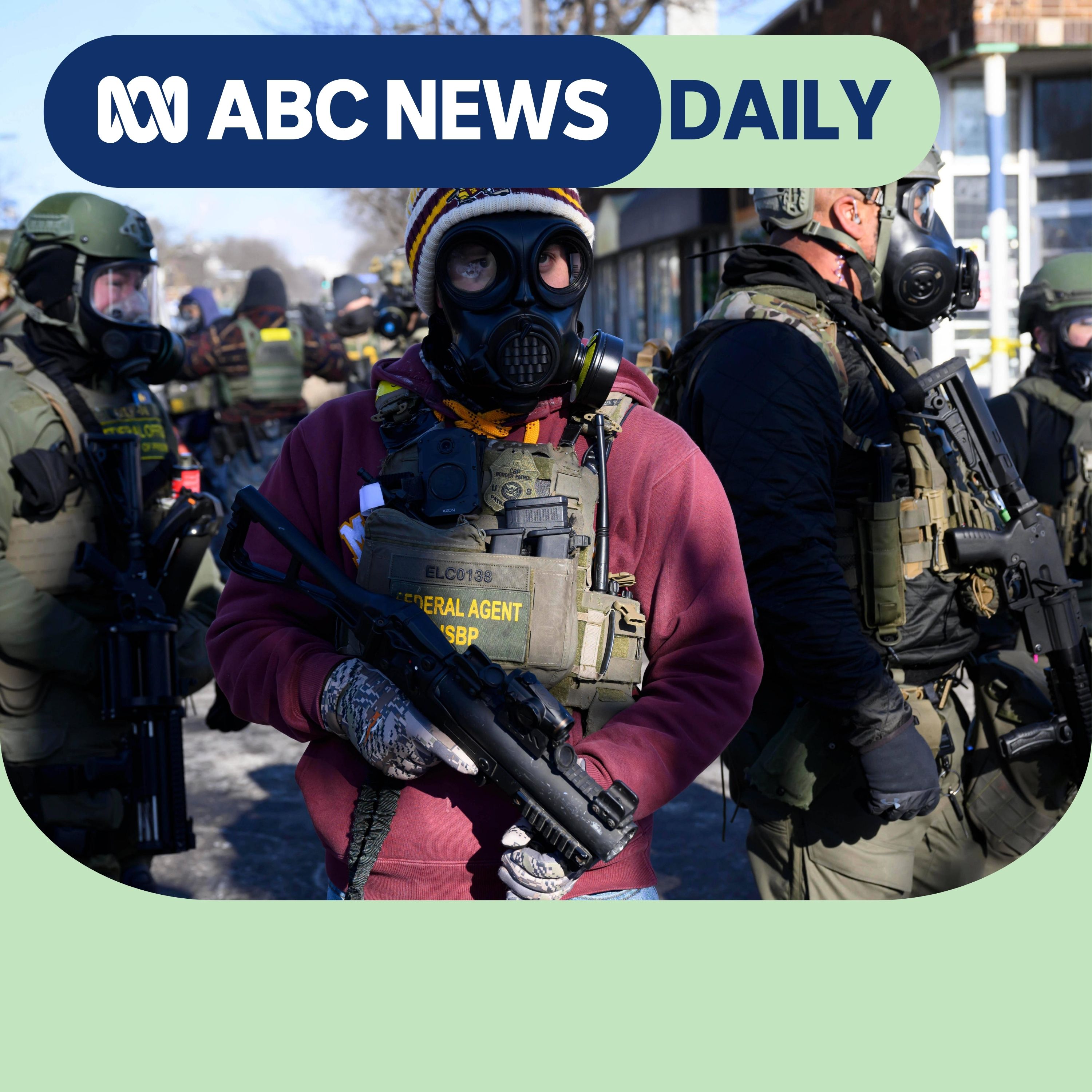
Overview of How the ICE killings could lead to a civil war (ABC News Daily)
This episode of ABC News Daily (host Sam Hawley) features Claire Finkelstein, a national security law professor and faculty director at the Centre for Ethics and the Rule of Law, discussing a federal ICE deployment in Minneapolis that coincided with the deaths of two people documenting agents. The interview examines the use-of-force questions, the federal government’s public defense of agents, the political aims behind the operation, and a tabletop civil‑war simulation Finkelstein helped run that shows how federal‑local clashes could escalate into broader violence.
Key points and main takeaways
- Two civilians were killed while filming ICE/federal agents in Minneapolis; video and forensic reporting raise serious doubts about the agents’ account that the shootings were defensive.
- Witness footage suggests at least one victim (Alex — spelled “Pretty”/“Preddy” in the transcript) was shot after a gun was removed and did not brandish a weapon; another (Renée Nicole Good in the transcript) was reportedly shot from behind as her car drove away.
- The federal government publicly defended agents and accused local leaders and protesters instead of committing to independent investigations; administration statements included claims that conflict with video evidence.
- Many deployed agents appear to have minimal training; Finkelstein warns the problem may be more than inexperience—there may be tacit or explicit permission from higher levels to use aggressive tactics.
- The administration has since signaled de‑escalation: sending border czar Tom Homan to oversee operations and praising Minnesota Governor Tim Walz — but much damage and mistrust remain.
- Finkelstein led a September 2024 tabletop exercise simulating a presidential law‑enforcement operation in a major Democratic city. The exercise showed how federalizing troops and clashing with state/local forces (and National Guard units loyal to governors) could produce localized confrontations that—if repeated across cities—might morph into nationwide instability.
Timeline & key actors
- Incident context: protests in Minneapolis triggered by the killings of two people who were documenting federal agents.
- Federal actors: ICE and other federal agents; Department of Homeland Security; Tom Homan (sent to oversee).
- State/local actors: Governor Tim Walz; Minneapolis mayor Jacob Frey (transcript spells “Fry”).
- Political signals: Pam Bondi letter reportedly conditioned ICE withdrawal on the governor turning over voter information (raising concerns about political motives tied to election manipulation and midterm strategy).
- Legal tool of concern: The Insurrection Act — previously threatened by President Trump — which could allow sweeping federal domestic military powers and federalization of National Guard units.
Civil‑war escalation scenario (from the tabletop exercise)
- Starting condition: A highly unpopular federal operation in a major Democratic city.
- Escalation mechanism: Federal agents clash with local police; both sides backed by their own armed forces (federal troops vs. state National Guard).
- Tipping point: Isolated clashes are not civil war, but simultaneous or systemic confrontations across multiple cities could create a de‑facto, widespread conflict between federal and state/local authorities.
- Expert judgement: Participants with state/federal/military experience judged such a scenario plausible under certain conditions; the Minneapolis situation has several of the relevant ingredients.
Legal and political implications
- Accountability: Finkelstein calls for full, independent investigations into the shootings and other uses of force to determine whether unlawful tactics were encouraged or tolerated.
- Judicial strategy: She recommends pushing disputes into the courts to obtain firm legal rulings about ICE tactics and to strengthen state and local bargaining power.
- Political motive concerns: Demands for state voter rolls and the administration’s posture create fears the operation has an electoral or coercive political purpose beyond immigration enforcement.
- Risk factors: Threats or use of the Insurrection Act, federalization of the Guard, and public misrepresentation of video evidence increase the risk of escalation.
What to watch next (practical signs and developments)
- Outcomes of independent forensic and criminal investigations into the two deaths.
- Legal actions by Minnesota or local officials against federal agencies and any court rulings on ICE tactics.
- Whether Governor Walz accedes to—or rejects—conditions tied to ICE withdrawal (notably requests for voter information).
- Deployment decisions: any move to federalize the National Guard or to send additional federal troops.
- Shifts in public opinion and local resistance (protests, city policies) that could prompt further federal responses.
- Any invocation of the Insurrection Act or similar extraordinary domestic authorities.
Notable quotes (highlights)
- On the optics and legal gravity: “We really never expected to see federal agents firing on American citizens who are engaging in peaceful protest, exercising their First Amendment rights.”
- On official messaging vs. evidence: “It is really shocking… to have the federal government come out and falsify what we are seeing with our own eyes and do it so brazenly.”
- On the simulation risk: “If you imagine a situation like that more systemically played out across multiple cities, now we start to see that there could be a kind of widespread and deeper confrontation.”
Recommended actions (from the episode’s perspective)
- Demand independent, transparent investigations into the killings and other uses of force.
- Use the courts to clarify lawful limits on federal agents and ICE tactics.
- Monitor and push back on any demands for voter data or steps that appear to politicize enforcement operations.
- Watch federal moves regarding the National Guard and any invocation of the Insurrection Act.
Notes: Transcript contained inconsistent spellings for some names (e.g., Alex “Pretty” / “Preddy”; Jacob Frey appeared as “Fry”); I retained the substance while noting uncertainties where relevant.