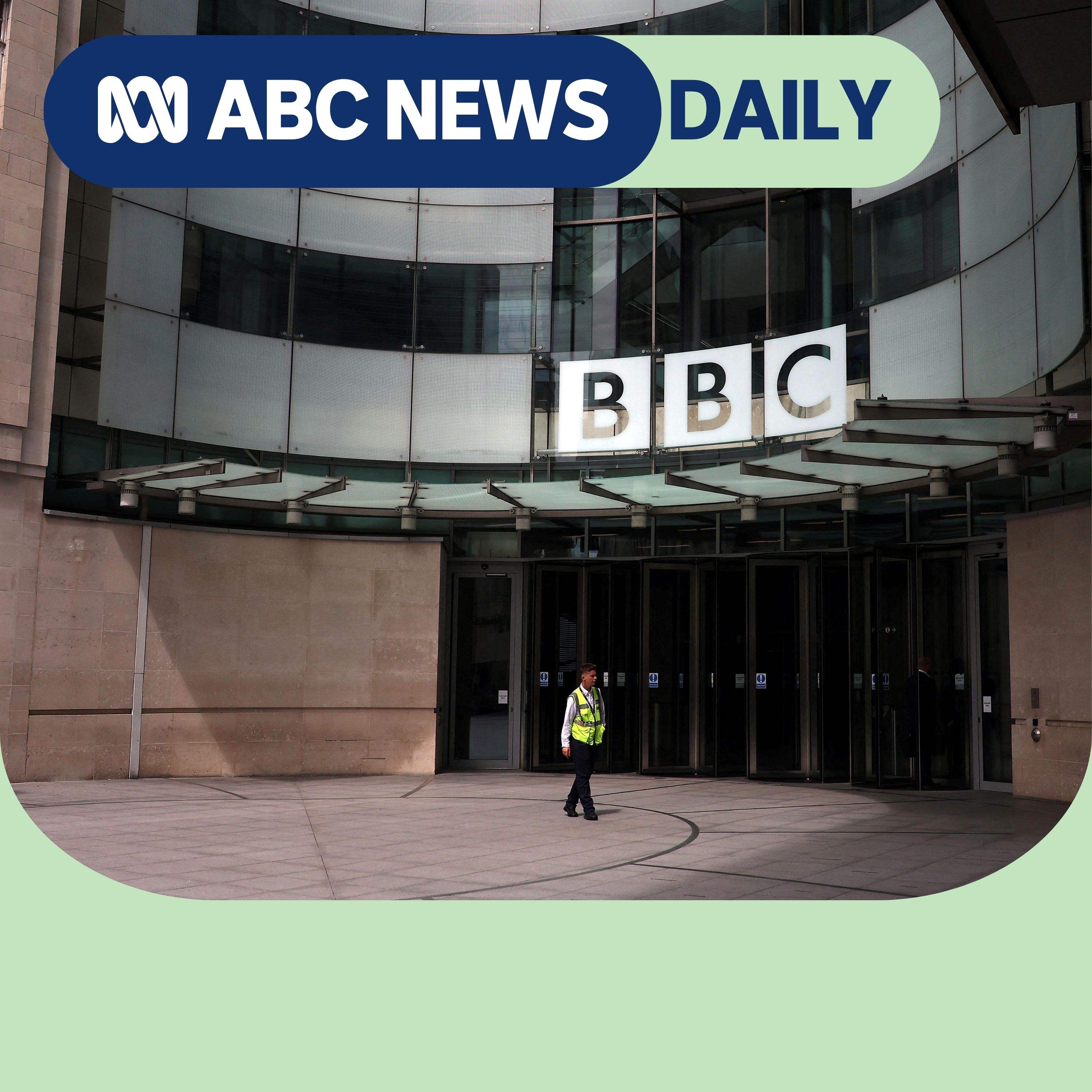
Overview of Did the BBC mislead viewers about Trump?
This ABC News Daily episode (host Sam Hawley) interviews journalist and UTS Professor Monica Attard about the controversy over a BBC Panorama documentary on Donald Trump. The programme allegedly edited two separate parts of Trump’s January 6 speech together — omitting a call to “peacefully and patriotically” protest — which critics say misrepresented whether Trump incited the Capitol riot. The story escalated after a leaked internal memo, published in the Telegraph, and culminated in senior BBC newsroom leaders stepping aside and threats of a billion‑dollar lawsuit from Trump.
Key points and main takeaways
- BBC Panorama’s documentary ("Trump: A Second Chance") used two Trump soundbites that were about 50 minutes apart and ran them together, creating the impression he incited the Capitol riot.
- The edit omitted a line in which Trump urged supporters to “peacefully and patriotically” make their voices heard — an omission The BBC later accepted was an editorial error.
- A leaked memo by a former BBC adviser (Michael Prescott) accused the broadcaster of wider editorial failings, touching on coverage of the Israel–Gaza war, transgender issues and alleged imbalance.
- The controversy intensified public and political pressure; BBC Director‑General Tim Davie and Head of News Deborah Turness stepped aside (voluntarily) amid the fallout.
- Trump has threatened a billion‑dollar lawsuit against the BBC; the episode highlights the fragility of public trust in legacy broadcasters in the Trump era and during polarising international coverage.
- Monica Attard says the episode was a serious error that should have been flagged/rectified quickly, but not necessarily one that by itself warranted senior resignations — the resignations reflect accumulated pressures and damaged trust.
What happened: the edit and its implications
- The contested clip combined: “We’re going to walk down to the Capitol” with “We will fight… we fight like hell,” although those lines were delivered nearly an hour apart in a single ~70‑minute speech.
- The documentary omitted Trump’s intervening appeal to protest “peacefully and patriotically.”
- Critics accused Panorama of decontextualising and effectively doctoring the footage; the BBC later acknowledged the failure in its editorial processes.
- A U.S. Congressional committee had concluded Trump’s actions on Jan 6 merited criminal referrals, which provides the documentary broader context — but the editorial omission still mattered because it changed perceived intent and balance in that specific sequence.
The leaked memo and organisational fallout
- A leaked dossier by a former BBC editorial adviser alleged multiple instances of bias and poor editorial control across sensitive areas (Middle East coverage, transgender reporting, and political coverage).
- The dossier was published in the Telegraph, increasing public scrutiny and political pressure.
- BBC executives initially defended the editorial intent but later apologised; senior news leaders stepped aside amid the mounting backlash.
- The episode demonstrates how a single high‑profile error plus accumulated criticism can catalyse institutional crises for public broadcasters.
Broader implications for public broadcasting and journalism
- Public broadcasters (BBC, ABC) face intensified attacks from political figures, commercial competitors and activist pressures — which can erode public trust over time.
- The Trump era’s continual “fake news” rhetoric accelerates distrust even among those not aligned with Trump.
- Risks include:
- Damage to institutional credibility when errors are not promptly corrected or properly explained.
- Self‑censorship or excessive caution by journalists trying to avoid litigation or political firestorms.
- Pressure to manufacture “balance” where none is warranted (false equivalence).
- Monica Attard’s prescription: recommit to robust editorial standards, transparent processes, prompt corrections and clear signposting when editorial edits affect context.
Recommendations / action items for broadcasters
- Immediately and clearly label any editorial splices or significant edits in audiovisual material (graphics, timestamps or on‑screen notes).
- Strengthen pre‑broadcast fact‑checking and editorial sign‑off processes, particularly for politically sensitive documentary content.
- When errors occur: issue prompt, specific apologies; explain the error, the steps taken to correct it, and the systemic fixes to prevent recurrence.
- Publicly demonstrate the journalistic methodology used to produce contentious pieces to rebuild trust.
- Resist false balance by applying investigative effort where evidence indicates genuine questions, not for the sake of perceived symmetry.
Notable quotes
- Monica Attard: “It was an editorial error and probably quite a grave one… Mistakes happen in journalism. The question is, are they corrected and how fast?”
- Deborah Turness (as quoted in the episode): “I stepped down… because the buck stops with me. But I’d like to make one thing very clear. BBC News is not institutionally biased.”
Bottom line
The BBC’s Panorama edit was a serious editorial lapse that should have been signposted and corrected quickly. While the error alone may not explain the full managerial fallout, it exposed weaknesses in process, transparency and timing of response — and it amplified existing doubts about impartiality in an already polarised media environment. The episode is a reminder that public broadcasters must be rigorous, transparent and swift in correcting mistakes to preserve public trust.