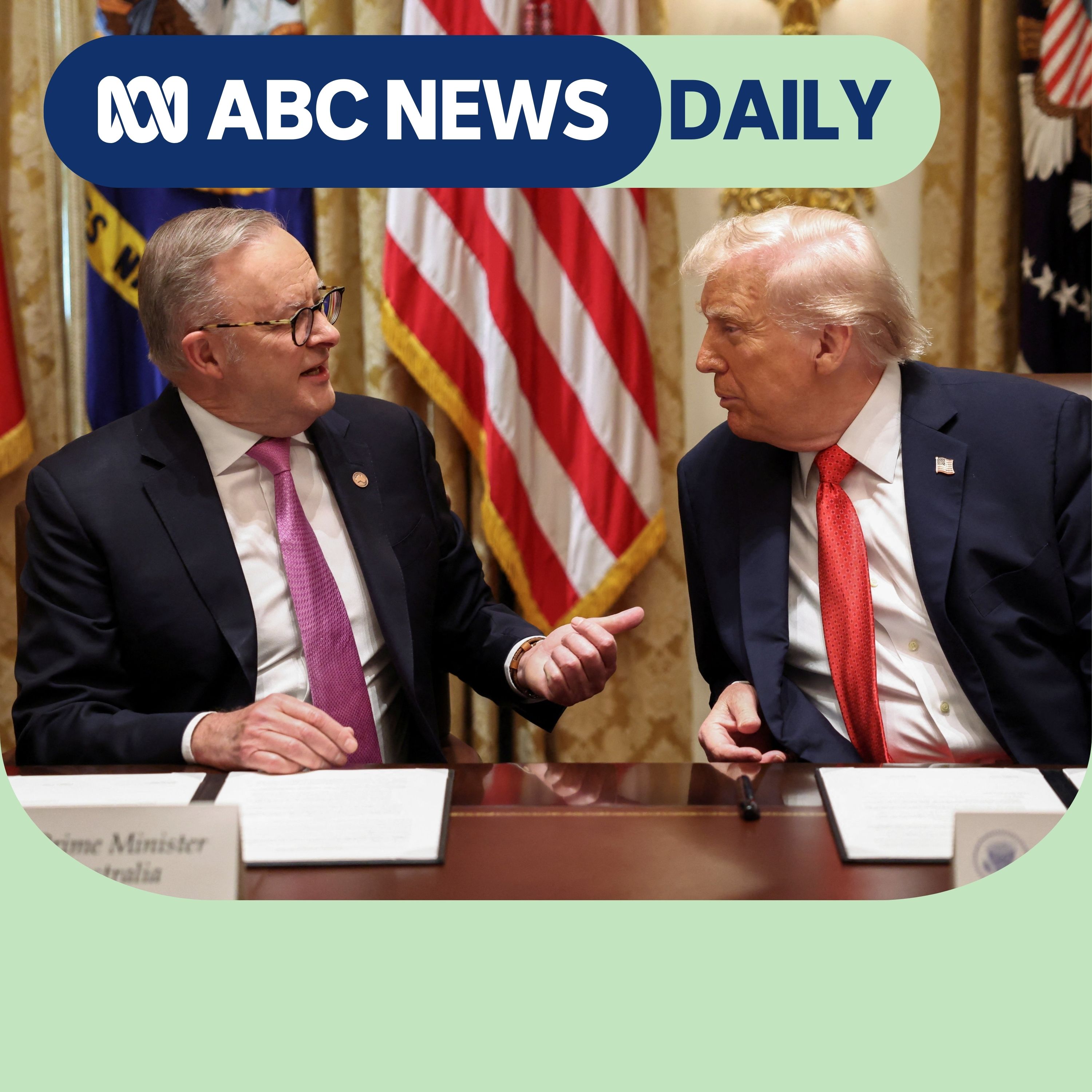
Overview of Can middle powers really take on Trump?
This episode of ABC News Daily (host Sam Hawley) features Samir Puri, author of Westlessness: The Great Global Rebalancing, discussing a high-profile Davos intervention by Mark Carney and what it means for “middle powers” as US policy under Donald Trump upends the post–Cold War rules-based international order. The conversation covers whether countries like Australia, the UK, Japan and parts of the EU can meaningfully coordinate to reduce dependence on an increasingly unpredictable US, how many states already hedge between great powers, and practical steps middle powers could take.
Key takeaways
- Mark Carney’s Davos intervention (Carney is a prominent Canadian public figure, formerly Governor of the Bank of Canada and the Bank of England) framed the US-led rules-based order as largely a fiction that no longer reliably protects smaller partners. That message resonated strongly with close US allies.
- The world is shifting from a largely Western-dominated order to a multipolar system where non-Western powers (notably China) have greater influence. This change will persist even after Trump leaves office.
- Many countries already practice hedging—balancing relations with the US, China and others—so Carney’s call mostly formalizes behavior that much of the non-Western world has long followed.
- For countries closely tied to the US (Australia, the UK), the shock is greater: they must reconsider dependence on the US for defence, trade rules and dispute resolution.
- Practical proposals for middle powers cluster around three priorities—Defence, Démarche (coordinated diplomatic protest), and Dynamism.
What Mark Carney actually said and why it matters
- Core claim: The “rules-based international order” that many Western countries relied on is not a permanent guarantee—strong states have always exempted themselves when convenient, and current US actions (tariffs, unilateral economic pressure) expose that fiction.
- Implication: Allies can no longer assume automatic US leadership or protection; they should self-organize more effectively and diversify partnerships.
- Reception: For countries dependent on the US, this was a blunt and novel statement. For many other states it simply reflected longstanding hedging strategies.
Who counts as “middle powers” — and why the term is slippery
- Middle powers are states that are neither superpowers (US, China) nor microstates; examples discussed: Australia, UK, Japan, parts of the EU, Indonesia, (somewhat) India.
- The category is imprecise—covers a wide range of capabilities and strategies—but the idea is to marshal collective influence among these states to protect common interests without full reliance on a single hegemon.
The “Three Ds” middle powers could pursue
1) Defence
- Reduce overdependence on US-supplied defence systems and procurement (e.g., rethink automatic purchases of US platforms).
- Explore greater interoperability and regional defence cooperation among middle powers (Australia–Japan–UK/EU coordination).
2) Démarche (coordinated diplomatic protest)
- Use collective diplomatic pressure to deter aggressive or irregular behaviour by major powers (e.g., coordinated responses to unilateral annexationist rhetoric or coercive economic measures).
- Even private, concerted diplomacy could signal solidarity and raise the political cost of aggressive moves.
3) Dynamism
- Display policy agility: diversify trade partners, deepen people-to-people links, innovate in economic and security arrangements.
- Middle powers must actively shape new institutions and arrangements that reflect a more multipolar world.
Examples and evidence discussed
- Canada’s outreach to China (talks on EV imports and people-to-people links) interpreted as hedging and a signal that Canada won’t be wholly dependent on the US.
- UK outreach to Beijing (Labour leader Keir Starmer trip) and the EU–India trade engagement are cited as examples of diversification.
- Indonesia and India routinely balance relations with the US, China (and in India’s case, Russia) — illustrating long-standing multi-alignment.
- Australia has deep economic ties to China but has experienced coercive trade measures, showing China can be as unpredictable as the US in different ways.
Practical recommendations for middle powers (summary)
- Reduce single-source dependence (especially in defence procurement).
- Coordinate diplomatic stances and responses among sympathetic states to deter unilateral coercion.
- Diversify economic and security partnerships regionally and globally.
- Expect and prepare for a permanently more multipolar world; design policies that are resilient to shifts in US leadership and greater Chinese influence.
Notable quotes and lines
- “If we’re not at the table, we’re on the menu.” (Summarizes the urgency for middle powers to coordinate.)
- “We are in the midst of a rupture, not a transition.” — Samir Puri, on the depth of global change.
- The rules-based order “was always a fiction” — main theme of the episode: that US leadership made the fiction sustainable, and its erosion exposes it.
Context about the guest and production
- Guest: Samir Puri, author of Westlessness: The Great Global Rebalancing; former director at Chatham House’s Centre for Global Governance and Security.
- Production: Episode of ABC News Daily hosted by Sam Hawley; produced by Sydney Pead and Cinnamon Nippard; audio production by Sam Dunn.
Summary: The episode frames Mark Carney’s Davos call as a wake-up for close US allies: the post–Cold War rules-based order can no longer be taken for granted. Middle powers should hedge, coordinate, and adapt through defence cooperation, coordinated diplomacy, and dynamic policy making to survive and shape a more multipolar future.