Overview of Can Europe stop Trump from taking Greenland?
This ABC News Daily episode (host Sam Hawley; guest Laura Tingle, ABC Global Affairs Editor) examines recent US president-driven pressure on Denmark and Greenland—ranging from public rhetoric about buying or seizing Greenland to threatened tariffs on European countries—and how Europe is responding. The conversation covers Greenlandic/Danish objections, European countermeasures, the strategic motivations Trump has cited, and the broader implications for NATO and transatlantic security.
Key points and takeaways
- Trump escalated rhetoric about acquiring Greenland (saying the US will “do something” whether they like it or not), floated buying it, and at times suggested forceful options; administration spokespeople backed up the rhetoric on US media.
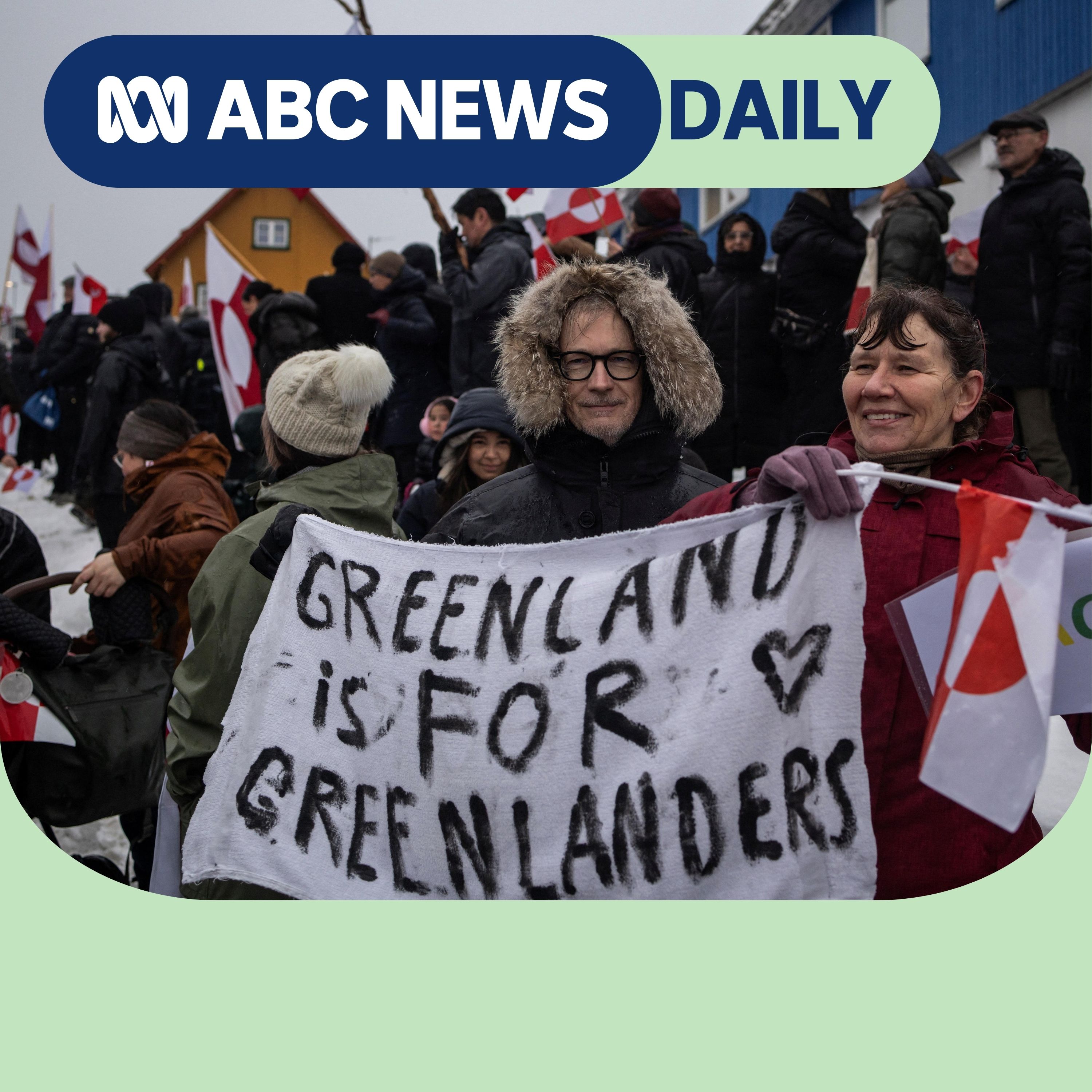
- Denmark and Greenland insist “Greenland is not for sale,” emphasizing self-determination and territorial integrity; Greenlanders have protested publicly.
- The White House announced tariffs (10% initially, threatened to rise to 25%) on several European countries in response to opposition—prompting a strong European backlash.
- Europe is mobilizing trade and legal tools in response: threats of €93 billion in counter-tariffs and the use of an “anti-coercion” instrument to punish coercive economic behavior.
- The episode frames the incident as more than a territorial squabble: it has become a flashpoint that could damage NATO cohesion and transatlantic relations if tensions escalate.
Topics discussed
- Trump’s rhetoric and policy confusion: buying vs. seizing Greenland; frequent shifts in tone and approach driven by public posts and statements.
- Greenland and Denmark’s response: firm rejection, citing self-determination and international law; diplomatic meetings (Danish/Greenland ministers with US officials) ended without agreement.
- European reactions: unified anger, coordinated trade responses, and proposals to restrict market access for US firms and to deploy trade “weapons.”
- Strategic drivers for US interest in Greenland: claimed security needs (missile/air-defense “dome”), Arctic shipping lanes opening with climate change, and natural resources (including rare earth minerals).
- Claims of foreign (Chinese/Russian) military presence near Greenland were noted by the US but described by analysts and Greenland/NATO allies as unproven or exaggerated.
- Potential cascade effects: threats to NATO obligations (especially Article 5), a possible US withdrawal from NATO commitments, and the geopolitical advantage this would give to Russia and China.
Notable quotes and characterizations
- Greenland/Denmark protesters: “We are not interested in being Americans.”
- US rhetoric (reported): “We are going to do something on Greenland, whether they like it or not.”
- European commentary (paraphrase): likening US tactics to “gangster” or “mafioso” methods—viewing tariff threats as standover tactics.
- Danish/Greenlandic diplomatic line: “Greenland is not for sale,” and any move that violates Denmark’s territorial integrity or Greenland’s self-determination is unacceptable.
European responses and tools
- Immediate trade retaliation: threatened counter-tariffs totalling ~€93 billion, and refusal to ratify an uneven trade agreement favorable to the US.
- Legal/policy tools: use of the EU’s anti-coercion instrument (proposed by Emmanuel Macron) to block/limit access for companies from coercive states and to hit back economically.
- Diplomatic pushback: direct interventions by EU leaders and national heads (e.g., UK leader contacting Trump) to assert sovereignty norms.
- Military/deterrence moves: increased European activity in the Arctic region was discussed by Denmark/Greenland as a security response; Europeans may step up presence without ceding sovereignty.
Risks and escalation scenarios
- Short term: further tariff increases and economic retaliation could intensify transatlantic trade conflict, harming multinational companies and US interests.
- Medium term: sustained US coercion could prompt a firmer EU alignment against the US and reduced willingness to cooperate on trade/security.
- Long term (worst-case): erosion of NATO cohesion if the US were to walk back Article 5 commitments or behavior made NATO cooperation politically untenable—this would advantage Russia and China geopolitically.
Practical implications / what to watch next
- Diplomatic signals from Denmark, Greenland, and EU institutions—how firmly they coordinate responses.
- Concrete EU measures: activation and application of the anti-coercion instrument; specific counter-tariffs or market access restrictions.
- US domestic pushback: whether major US industries (tech, defense) or political actors oppose tariffs/coercive policies and influence a change.
- Davos and international fora: upcoming summit interactions (World Economic Forum) where transatlantic tensions could be publicly tested.
- NATO statements and ministerial behavior—any sign of strain or formal shift in collective defense commitments.
Bottom line
The Greenland episode has moved beyond an odd headline to a serious transatlantic confrontation about sovereignty, trade coercion, and the health of NATO. European leaders are reacting strongly with economic and legal countermeasures; Greenland and Denmark remain firmly opposed. The broader risk is not Greenland itself but potential unraveling of transatlantic cooperation if coercive tactics continue or if NATO commitments are questioned.