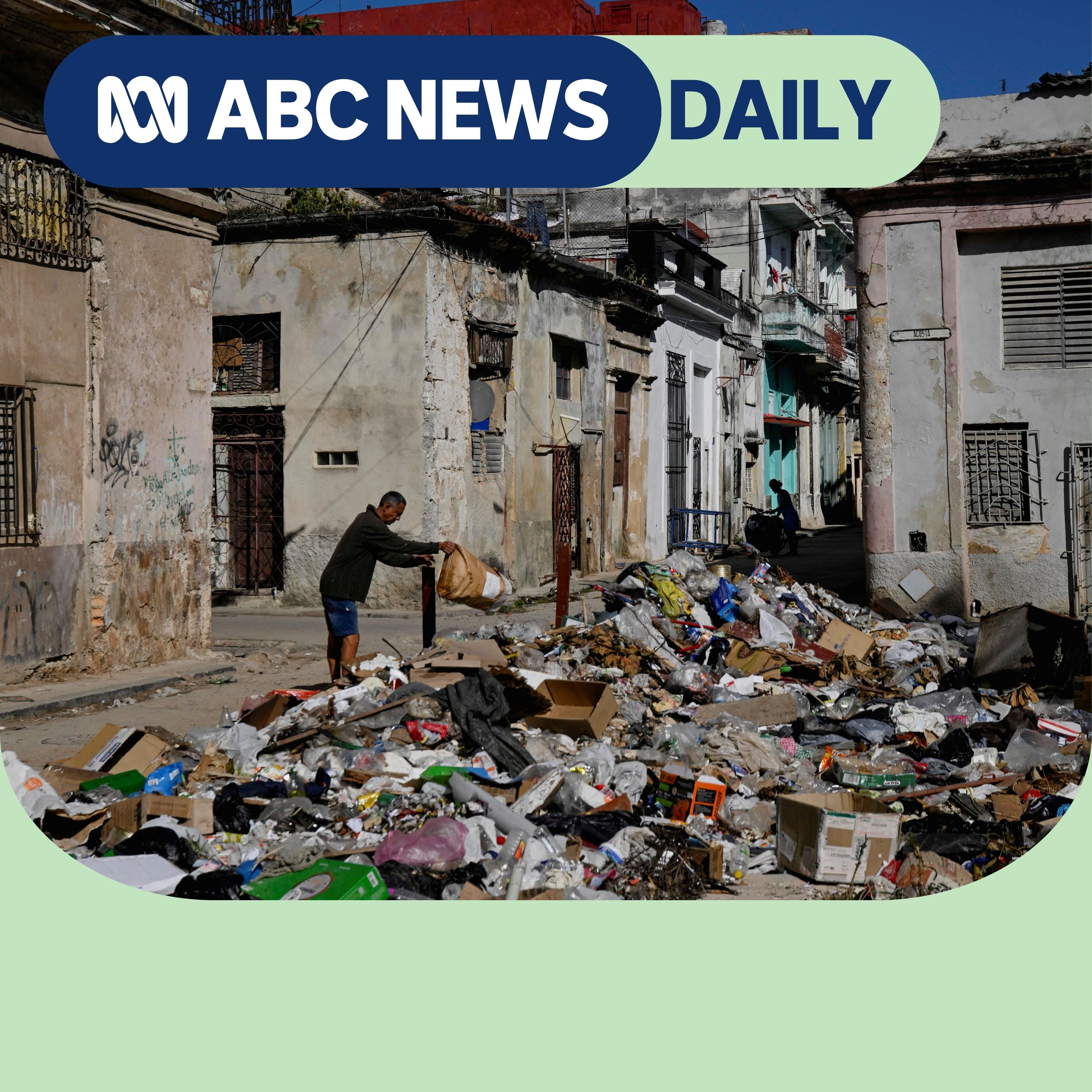
Overview of After Iran and Venezuela, is Cuba next for Trump?
This ABC News Daily episode (host Sam Hawley) features Lillian Guerra, Professor of Cuban and Caribbean History at the University of Florida, discussing the mounting U.S.–Cuba tensions under the Trump administration. The conversation centers on a U.S.-imposed oil embargo, Cuba’s severe energy and infrastructure collapse, a disputed Russian tanker reportedly bound for Cuba, and whether Washington intends to force regime change similar to its posture on Venezuela.
Key points / main takeaways
- Cuba is facing a deep humanitarian and infrastructure crisis: repeated nationwide blackouts, fuel shortages, and disrupted public services (including trash collection).
- The Trump administration has imposed an oil embargo on Cuba and threatened tariffs on nations supplying oil, aiming to induce political change; the exact endgame is unclear but likely includes opening Cuba to U.S. investment.
- A Russian tanker (or tankers) has been tracked near the region; if oil reaches Cuba it may take weeks before civilians see relief due to refining and distribution bottlenecks.
- Lillian Guerra argues the Cuban state’s entrenched security apparatus makes a Venezuela-style quick regime change unlikely. The Cuban government retains substantial internal control and networks of patronage.
- Possible flashpoints include U.S. naval involvement, mass migration toward Florida, and chaotic street protests—any of which could quickly escalate the situation.
Background and context
- Trump administration tightened sanctions and removed subsidies for Cuba; Secretary of State Marco Rubio ties lifting the embargo to political change in Havana.
- Cuba’s economy and services have been degrading for years; recent crises (multiple grid failures in 2025) have intensified public hardship.
- Cuba’s allies (Russia, China) can provide some assistance, but their support has limits and logistical challenges.
Current situation on the ground in Cuba
- Repeated national electricity grid failures left millions without power; one recent blackout affected the whole island.
- Fuel shortages have grounded trucks, delayed fuel distribution and trash collection, and exacerbated public health and sanitation risks.
- Public outrage is growing, but censorship and state control of information make it hard for Cubans to verify news and organize.
U.S. policy goals and likely motivations
- The embargo aims to pressure political concessions from the Cuban government; officials also expect to open economic opportunities for U.S. investors.
- Guerra suggests Trump's vision prioritizes real estate and foreign ownership (land sales) and corporate access more than agricultural development or humanitarian relief.
- The administration may hope to force leadership concessions or a compliant regime over time, but expectations of a rapid takeover are unrealistic given Cuba’s institutional structure.
Russia’s role and the tanker standoff
- Russia is a historical ally and has sent episodic support, but not sustained, system-changing aid.
- A Russian oil shipment could help alleviate shortages, but refining capacity, distribution logistics, and an unstable power grid mean relief would be slow and partial.
- The presence of Russian tankers near Cuban waters raises the risk of U.S. naval responses or diplomatic confrontation.
Cuban leadership and internal dynamics
- Miguel Díaz-Canel is the Communist Party Secretary-General and President—seen as Raul Castro’s declared successor.
- Under Díaz-Canel Cuba has tightened legal and political repression (new constitution reinforcing one-party rule and emphasizing duties over rights).
- The state contains a large security apparatus and a network of people materially tied to regime loyalty—this institutional depth makes abrupt regime collapse unlikely.
Expert assessment and likely scenarios (Guerra)
- Short-term possibilities:
- A dramatic, uncontrolled public outburst that neither government manages effectively, leading to unpredictable political outcomes.
- The Russian oil arrives and the island stabilizes enough for a “softer landing,” reducing acute humanitarian crisis without immediate political change.
- Guerra rejects the idea that the U.S. can duplicate its Venezuela strategy in Cuba; Cuba’s embedded security state and institutional reach are major obstacles.
- She urges diplomatic engagement to buy time for recovery and reduce the risk of explosive escalation.
Notable quotes
- On Trump’s rhetoric: “Maybe a friendly takeover. It may not be a friendly takeover.”
- On Cuba’s infrastructure collapse: “Cuba’s national energy grid has suffered a total collapse, causing an island-wide blackout and leaving 11 million people without electricity.”
- On Díaz-Canel: “He presided over a new constitution that lists the power of the Communist Party as irrevocable… The duties of Cubans include that they must show loyalty and they must defend the socialism as defined by the Communist Party.”
Implications and what to watch next
- Monitor the trajectory and fate of the Russian tanker(s) and any U.S. naval movements in the Caribbean.
- Watch domestic indicators in Cuba: frequency/severity of blackouts, migration attempts toward Florida, and scale of protests.
- Look for diplomatic moves (U.S., Mexico, Russia, and Cuba) that could defuse or intensify the standoff.
- Humanitarian concerns suggest urgency for international coordination to alleviate civilian suffering regardless of political aims.
Produced by ABC News Daily — Lillian Guerra (University of Florida) interviewed by Sam Hawley.