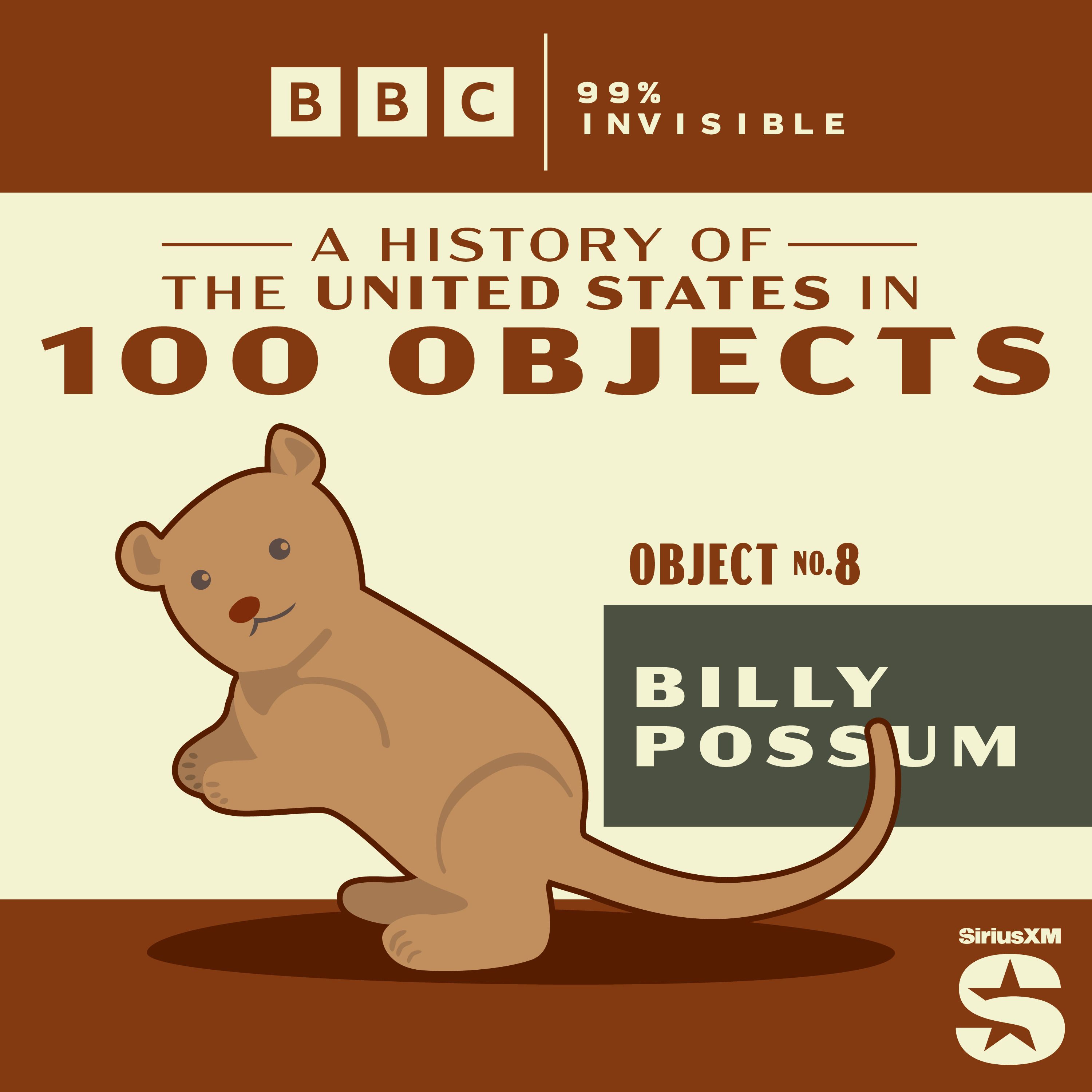
Overview of 100 Objects #8: Billy Possum
This episode of 99% Invisible tells the strange, revealing story of the “Billy Possum,” a short-lived attempt to turn William Howard Taft into the next Theodore Roosevelt-style mascot after the runaway success of the teddy bear. Through that failure, Roman Mars explores how Americans turn animals into symbols—first as threats, then as cuddly icons, and later as rallying points for environmental causes. The episode argues that our feelings about animals often say as much about us, our politics, and our relationship to nature as they do about the animals themselves.
The Story of the Billy Possum
How the teddy bear created a marketing template
- In 1902, Theodore Roosevelt spared a wounded bear on a hunting trip in Mississippi.
- A political cartoon about the incident inspired toy makers to create the “teddy bear.”
- The teddy bear became a massive commercial success and a cultural icon.
The failed attempt to replicate it with Taft
- When Taft succeeded Roosevelt, entrepreneurs looked for his equivalent mascot.
- At a banquet in Atlanta, Taft was served possum and taters and was later gifted a stuffed opossum.
- The toy was marketed as the Billy Possum (“Billy” for William Howard Taft).
- Merchandising followed quickly: toys, pins, postcards, and promotional efforts aimed at making opossums the new national craze.
Why it flopped
- The possum lacked the teddy bear’s emotional appeal and symbolic backstory.
- It was also, bluntly, not especially cuddly in public imagination.
- The craze died almost immediately, barely surviving past the year it began.
Animals as Symbols in American Culture
From monsters to mascots
The episode traces a larger historical pattern:
- In the early 1900s, bears were seen as dangerous “monsters” tied to frontier hardship.
- Government campaigns actively worked to eliminate predators like bears, wolves, and coyotes.
- As bears disappeared, they became more sentimental in books and children’s stories.
The emotional reversal
Roman Mars and guest Jon Mooallem describe a recurring cycle:
- An animal is feared or hated.
- Humans try to control or eradicate it.
- The animal becomes rare or endangered.
- Public feelings shift toward empathy and protection.
This helps explain why the teddy bear worked so well—and why the Billy Possum did not.
The Polar Bear and Climate Change
A modern version of the same pattern
The episode connects the teddy bear’s story to a later environmental campaign:
- In the 2000s, environmental lawyers and activists used the polar bear to bring attention to climate change.
- The Center for Biological Diversity sought to list the polar bear under the Endangered Species Act specifically because of climate-driven sea ice loss.
Why the polar bear worked
- It had strong science behind its vulnerability.
- It was visually compelling and already culturally familiar as a charismatic animal.
- It fit the same emotional logic as the teddy bear: once feared and powerful, now vulnerable and in need of rescue.
Public response and legal limits
- The petition drew enormous public attention, including hundreds of thousands of comments.
- But the Bush administration used legal workarounds to avoid the broader implications of regulating greenhouse gases.
- The result was symbolic success but limited policy change.
Main Takeaways
- Symbols matter, but they are not the same as solutions.
- The teddy bear succeeded because it carried a deep cultural story about fear, power, and reversal.
- The Billy Possum failed because it had no comparable emotional resonance.
- The polar bear became a powerful environmental symbol, but even a strong symbol cannot by itself solve a systemic issue like climate change.
- The episode warns against confusing emotional attachment to an animal with real political or environmental action.
Notable Insight
“We start by demonizing an animal, then eradicating it, and then suddenly empathizing with it as a helpless underdog.”
This is the episode’s core idea: American culture often rewrites animals after the fact, turning former enemies into beloved icons once they become vulnerable—or useful.
Closing Thought
The Billy Possum is a comic historical footnote, but the story behind it is bigger than one failed toy. It’s about how Americans use animals to process fear, nostalgia, morality, and environmental responsibility—and how easily symbols can become detached from reality.