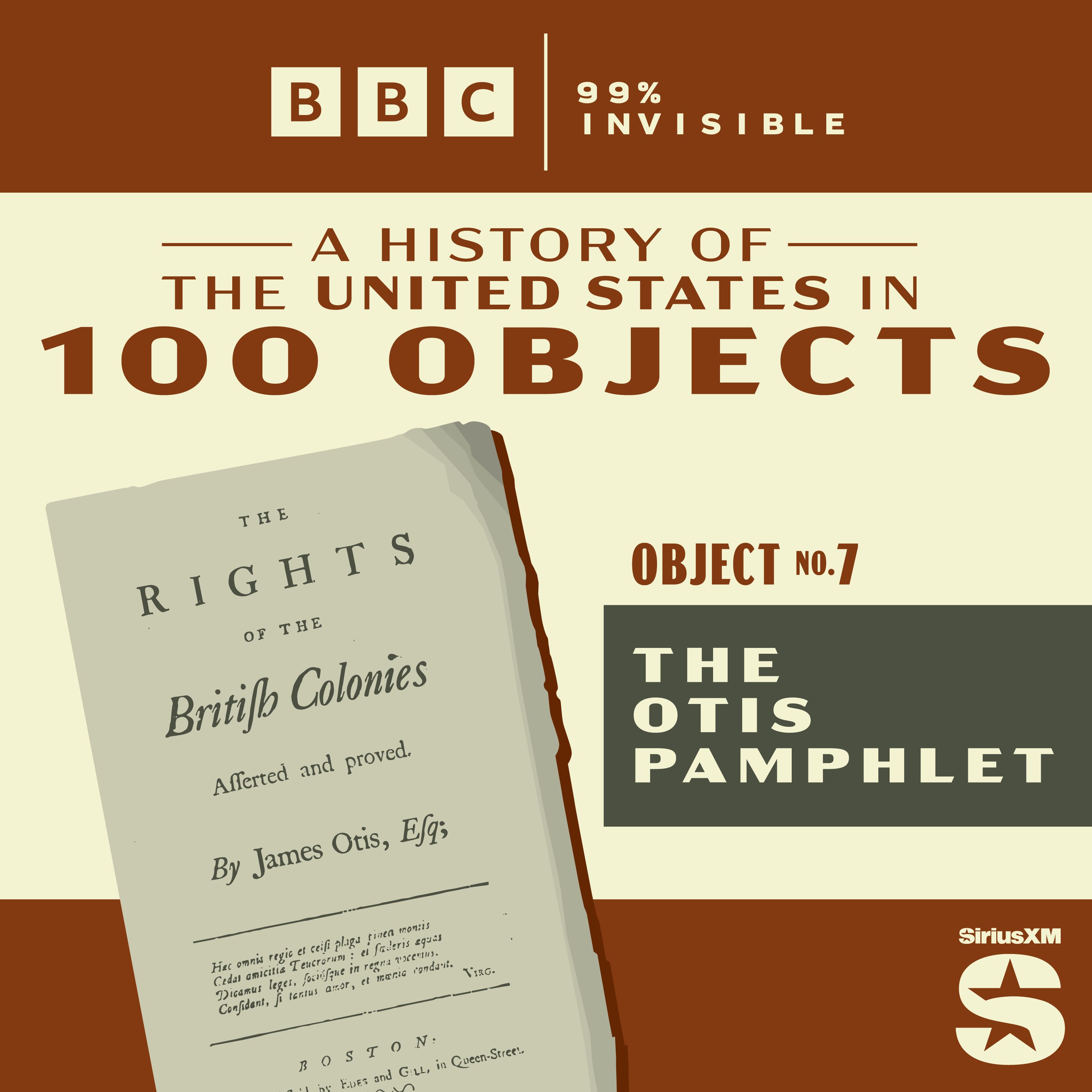
Overview of 100 Objects #7: The Otis Pamphlet
This episode tells the dramatic, largely forgotten story of James Otis and his 1764 pamphlet, The Rights of the British Colonies, Asserted and Proved—a document the show frames as an early spark of the American Revolution. Hosted by Roman Mars and narrated through the reporting of Jack Hitt, the episode traces how Otis’s fiery opposition to British writs of assistance helped shape ideas that would later become central to American democracy, including natural rights, checks and balances, and taxation without representation.
The Core Story
The Boston courtroom showdown
- In 1761 Boston, British customs officials used broad search warrants called writs of assistance to search homes, warehouses, and ships for smuggled goods.
- Merchants challenged these warrants in court.
- James Otis, a brilliant and combative lawyer, unexpectedly switched sides to represent the merchants for free.
- He delivered a five-hour speech arguing that the warrants were unconstitutional and violated basic liberties.
Otis’s revolutionary argument
Otis’s speech and later pamphlet made several radical claims for the time:
- A person’s home is a protected private space: “a man’s house is his castle.”
- Some rights exist before government and cannot be overridden by Parliament.
- Government power should be limited through what he described as checks and balances.
- Taxation without representation is unjust.
- In one striking passage, he extends natural freedom to “all men, white or black,” pushing his logic toward anti-slavery ideas.
The pamphlet’s impact
- In 1764, Otis expanded his arguments in print.
- The pamphlet circulated widely in the colonies and even in London.
- Though it was mocked by some British legal authorities, it helped popularize arguments that later became revolutionary common sense.
- John Adams, who was in the courtroom taking notes, later wrote that “then and there the child independence was born.”
Otis’s Decline
Backlash and retreat
- After his ideas were seen as dangerously close to treason, Otis began backtracking in later writings, apologizing and reaffirming loyalty to Parliament.
- He became socially and politically isolated in Boston.
Violence and mental collapse
- Otis continued feuding with customs officials and eventually got into a street fight with one of them, John Robinson.
- Robinson badly cracked Otis’s skull with a cane, and the injury appears to have triggered a devastating mental decline.
- Otis became erratic, alcoholic, and increasingly unwell.
- He was eventually declared a lunatic and withdrew from public life.
The Irony of History
- While Otis was sidelined, others—especially Samuel Adams, John Hancock, Thomas Jefferson, and George Washington—carried the revolutionary ideas forward.
- Otis did not get to enjoy the revolution he helped inspire.
- At a postwar celebration hosted by Hancock, Otis was brought along out of respect, but the sight of the new nation’s leaders and the life he might have lived overwhelmed him.
- He later died in a dramatically fitting way: struck by lightning in 1783.
Main Takeaways
- Ideas can matter even when the person who voiced them is forgotten.
- Otis helped move colonial resistance from a complaint about taxes into a broader theory of inherent rights.
- His pamphlet shows how revolutionary language often begins as a defense of existing liberties before evolving into a demand for a new political order.
- The episode frames Otis as a tragic hero: brilliant, prophetic, self-destructive, and ultimately eclipsed by the movement he helped create.
Notable Lines and Ideas
- “A man’s house is his castle.”
- “Let the consequences be what they will. I am determined to proceed.”
- “The worst instrument of arbitrary power…” — Otis’s description of the writs of assistance.
- “Taxation without representation is tyranny.” — the later shorthand for one of Otis’s core arguments.
- Otis’s broad logic that rights come from nature/God, not government, becomes a foundational American idea.
Why This Episode Matters
This episode is less about a single forgotten pamphlet than about how the American Revolution began as a struggle over power, privacy, and legal limits. Otis’s story shows that the founding era was not just shaped by the famous giants everyone remembers, but also by intense, half-forgotten figures whose ideas cracked the door open first.