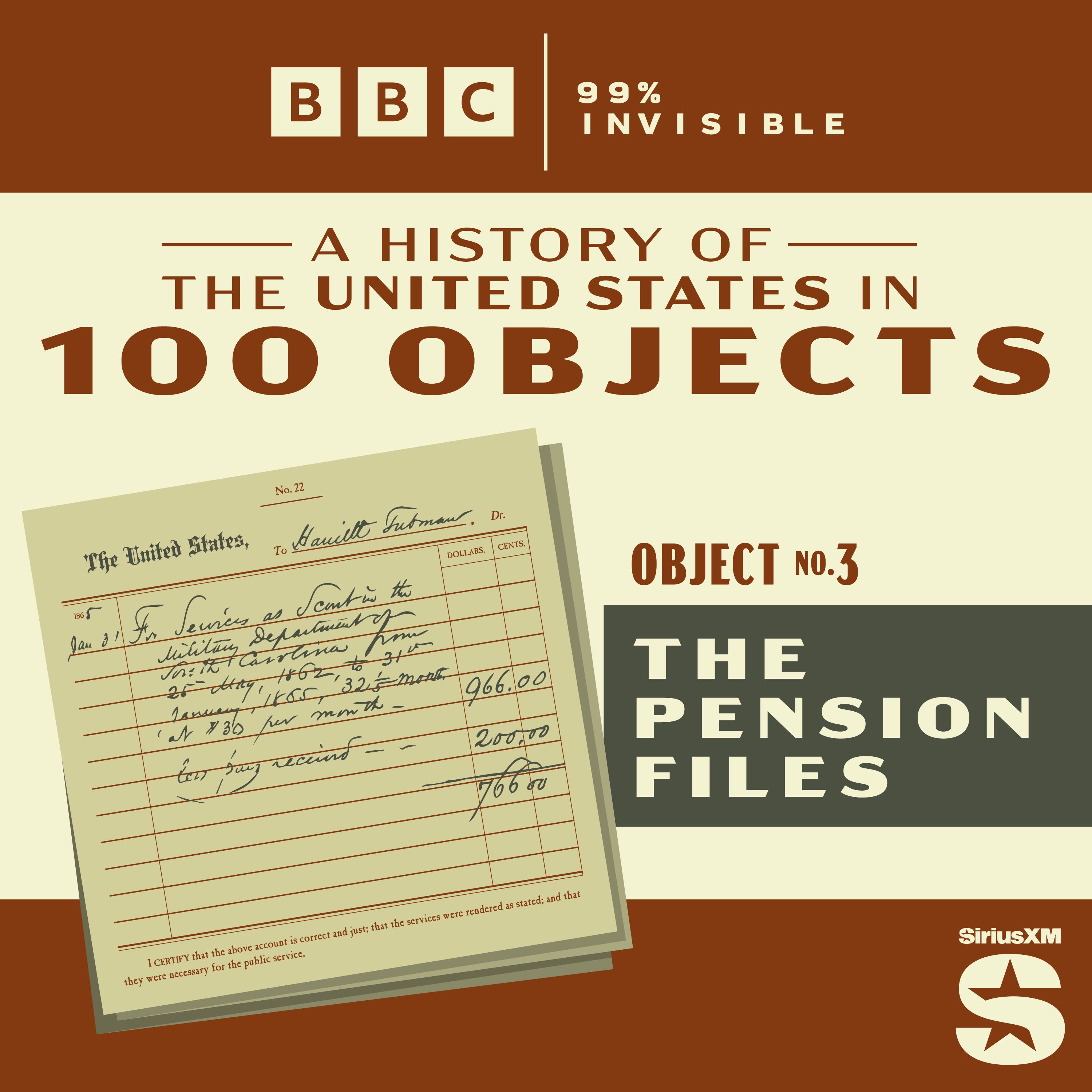
Overview of 100 Objects #3: The Pension Files
This episode of A History of the United States in 100 Objects explores how Civil War pension files became an unexpectedly rich historical source for reconstructing the story of the Combahee River Raid—the largest and most successful slave liberation action in U.S. history—and for recovering the names, lives, and family relationships of formerly enslaved people. Historian Dr. Etta Fields Black explains how these bureaucratic records revealed not just military service, but personal testimony that helped restore identity and agency to people whose histories had been erased by slavery.
The Combahee River Raid
Harriet Tubman’s role
- Harriet Tubman had already established herself as a legendary abolitionist by making repeated rescue trips back into slavery territory.
- During the Civil War, she served the Union Army as a spy and scout in Beaufort, South Carolina.
- In the Sea Islands and Port Royal region, the Union had created a fragile free zone after Confederate forces fled and left thousands of enslaved people behind.
Why the raid worked
- The rice plantations along the Combahee River were especially vulnerable in June:
- White plantation owners had usually left by then because of the deadly “sickly season.”
- Confederate troops were sparse.
- The river and marshes were dangerous but navigable with local knowledge.
- Tubman gathered intelligence from formerly enslaved people in Beaufort refugee camps:
- locations of mines and defenses
- river routes, bends, and sandbars
- plantation layouts and conditions
What happened on the night of the raid
- On the night of June 1–2, 1863, Tubman accompanied Colonel James Montgomery and the 2nd South Carolina Volunteers.
- A transport boat ran aground, but the raid continued with two boats.
- Union troops:
- burned plantation buildings and rice stores
- destroyed infrastructure
- flooded rice fields with salt water
- called enslaved people to freedom by boat and rowboat
- 756 people were liberated.
- One enslaved man, Minus Hamilton, remembered the sight of armed Black soldiers as “presumptuous,” marveling at Black men who stood upright, in uniform, and held power over their own lives.
Why the Pension Files Matter
A hidden archive of Black life
- After the war, Union veterans, widows, and children could apply for pensions.
- For Black applicants, these files often became the only surviving records of:
- birth and family ties
- marriages and children
- who enslaved them
- how families were separated
- personal relationships and community networks
Why they are historically important
- Because many formerly enslaved people had no official paperwork, they had to rely on witness testimony from people who knew them.
- That testimony created detailed oral histories inside government files.
- The files preserve the lives of ordinary people—not just famous figures—and allow historians to reconstruct communities that slavery tried to erase.
Etta Fields Black’s Discovery
From one story to a whole community
- Black first encountered Minus Hamilton’s account and wanted to know more about the people liberated in the raid.
- The pension files gave her a way to identify participants and rebuild the Combahee freedom-seeker community.
Her family connection
- Working with the International African American Museum’s Center for Family History, she traced her own ancestry.
- She began with an ancestor listed in the 1870 census, but like many descendants of enslaved people, she hit the “1870 brick wall.”
- A pension file for her ancestor’s brother, Jonas Fields, revealed:
- siblings’ names
- parents’ names
- how the family had been separated
- details of slaveholding and transfers of people as property
- She eventually learned that her ancestor Hector Fields had been one of the soldiers in the Combahee raid.
Main Takeaways
- The Combahee River Raid was a major Union operation that liberated hundreds of enslaved people and struck a blow against the Confederacy.
- Harriet Tubman was not only a conductor on the Underground Railroad; she also served as a military intelligence operative and raid participant.
- Pension files are more than administrative records—they are a crucial archive of Black family history, resistance, and self-definition.
- These records help restore the real names of people who were long known only by the names of enslavers.
- The episode shows how history can be recovered through accidental archives, patient research, and community testimony.
Notable Theme
The episode’s core idea is that liberation was not only military or political—it was also archival. The pension files allowed historians to recover identities, kinship ties, and lived experience, turning a dry government record into a deeply human document of freedom.