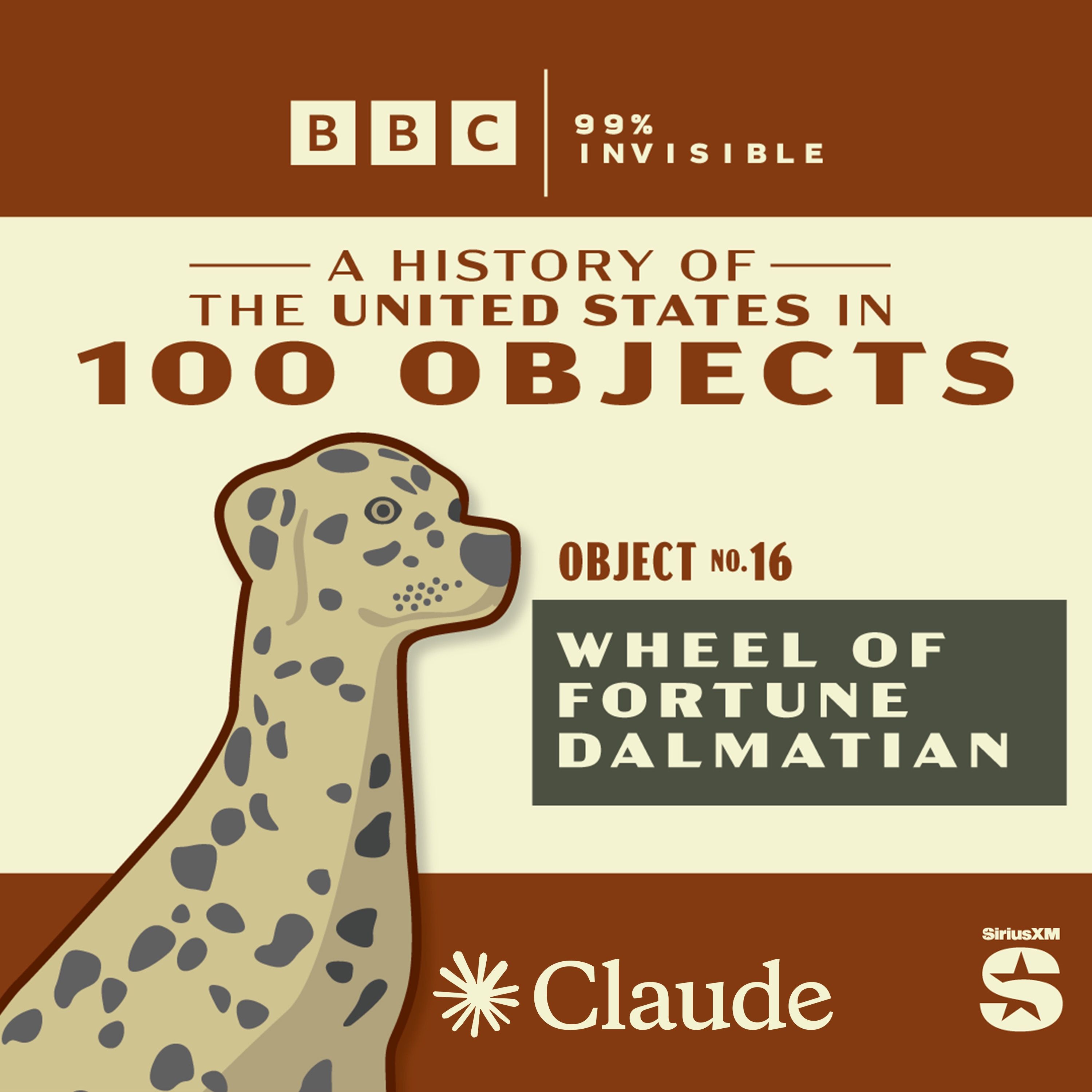
Overview of 100 Objects #16: Wheel of Fortune Dalmatian
This episode traces the surprising cultural life of the Wheel of Fortune ceramic Dalmatian—a cheap, oddly beloved prize from the show’s old shopping round—and uses it as a lens to tell the broader history of American game shows. Roman Mars connects one useless ceramic dog to shifting ideas about success, luck, consumerism, and the American dream, moving from the era of rigged quiz shows to the spectacle-driven game shows of today.
The Story of the Ceramic Dalmatian
Terry Eldridge’s family keepsake
- The episode opens with Terry Eldridge, who watched his father Roy appear on Wheel of Fortune in 1988.
- Roy won enough money to buy prizes on the show, including the now-famous ceramic Dalmatian.
- Terry originally thought his father had won a Jeep Wrangler in the bonus round, but the dog became the real lasting prize.
- Decades later, the Dalmatian still sits in Terry’s home as a sentimental reminder of his father.
Why the dog mattered
- The Dalmatian was essentially a consolation prize: a medium-sized ceramic dog contestants bought with leftover winnings.
- It had no practical use, which made it both ridiculous and memorable.
- Over time, it became a recognizable symbol of Wheel of Fortune’s shopping round and eventually even got the nickname “Sheldon.”
The History of Game Shows
From radio quizzes to cash-for-knowledge
- The episode explains that early American quiz shows began on radio in the 1920s as a way to sell newspapers and attract listeners.
- During the Great Depression, even small cash prizes made these shows compelling because they offered the fantasy that knowledge could change your life.
- After World War II, giveaways got bigger as consumer culture expanded and manufacturers used radio/TV to promote products.
The rise of the rigged quiz show era
- In the 1950s, prize money ballooned with shows like The $64,000 Question.
- Producers increasingly wanted charismatic, dramatic winners, which led to rigging and pre-selected champions.
- Charles Van Doren became the most famous face of the scandal after being presented as a brilliant, beloved star on 21.
- Congressional hearings exposed how widespread the deception was, and the public felt betrayed.
Why “game show” replaced “quiz show”
- After the scandals, “quiz” became a dirty word.
- The format shifted toward shows that relied more on:
- luck
- common sense
- physical action
- less emphasis on pure knowledge
Wheel of Fortune and the New American Dream
Merv Griffin’s invention
- Wheel of Fortune grew out of Merv Griffin’s ideas about hangman and carnival wheels.
- The early version included a shopping round, where contestants had to spend winnings on stage prizes rather than keep cash.
- The show mixed:
- puzzle-solving
- gambling-like wheel spins
- consumer fantasy
Why the shopping round worked
- The shopping round turned prizes into the real entertainment.
- Viewers loved imagining what they would buy:
- boats
- vacations
- furniture
- odd luxury items like a Gucci calculator
- The ceramic Dalmatian became the ultimate example of a prize that was weird, pointless, and somehow desirable.
Prime-time success
- Wheel of Fortune became a massive hit in the 1980s, especially after moving into prime time.
- The show was no longer just about solving puzzles; it became a cultural ritual built around wishing you had enough money to buy random stuff.
What the Dalmatian Symbolizes
A “microdose” of the American dream
- Roman Mars argues that the Dalmatian represents a version of the American dream where:
- essentials are covered
- you have enough money left over for nonsense
- you can buy something purely because you want it
- In that sense, it symbolizes financial security and conspicuous consumption more than practical reward.
From small prizes to huge money
- The episode contrasts the Dalmatian with modern competition shows like MrBeast’s Beast Games and Deal or No Deal Island, where the prizes are now enormous.
- Contemporary audiences expect bigger stakes, higher drama, and life-changing money.
- That makes the ceramic Dalmatian feel charmingly small-scale—and almost quaint—by today’s standards.
Key Takeaways
- The ceramic Dalmatian is not just a novelty prize; it’s a symbol of changing American values.
- Early quiz shows sold the dream that knowledge = success.
- The scandal years revealed that this dream was often fake, forcing game shows to pivot toward luck and spectacle.
- Wheel of Fortune made ordinary consumer goods feel exciting, turning the shopping round into a fantasy of having enough to buy useless things.
- The Dalmatian’s lasting appeal comes from its emotional value: it’s a trophy, memento, and family heirloom all at once.
Final Thought
The episode’s core argument is that the ceramic Dalmatian matters because it captures a uniquely American aspiration: not just to win big, but to win just enough to buy something silly, sentimental, and utterly unnecessary. In that way, it’s a perfect object for understanding both Wheel of Fortune and the changing shape of the American dream.