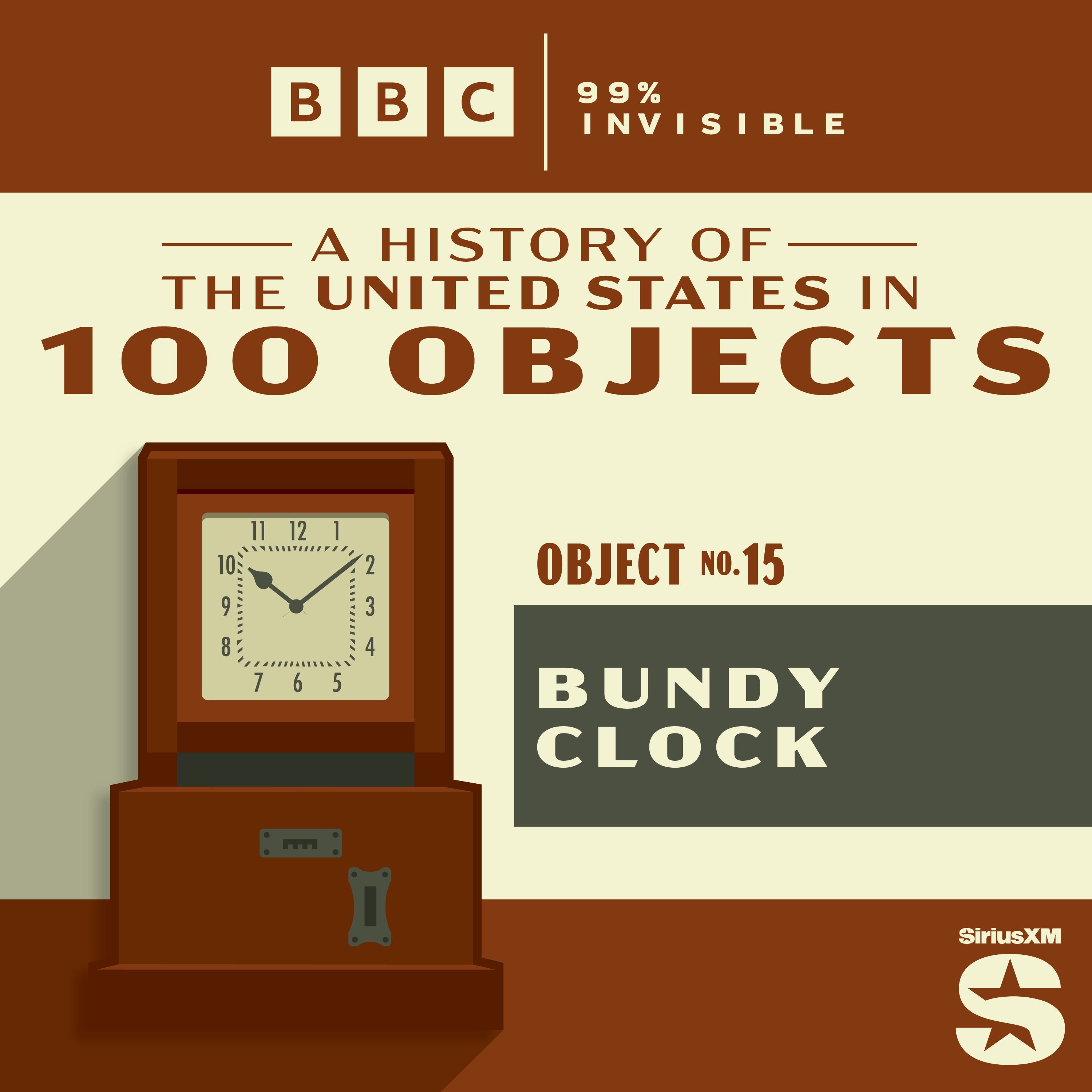
Overview of 100 Objects #15: Bundy Clock
This episode traces how the Bundy clock, the first employee time clock, helped transform American work culture from loosely measured labor into a system of clock time, surveillance, and efficiency management. What began as a practical solution to workplace disputes over punctuality became a foundational tool for modern corporate control—one that reshaped how employers measured workers, how workers understood themselves, and how time itself became a moral and economic discipline.
Main Story
Life before standardized time
- In colonial America, time was highly local and imprecise.
- People used sunlight, roosters, cows, church bells, and town clocks to tell time.
- Even after public clocks appeared in the 1600s, each city kept its own version of “noon,” which worked fine for farming but became a problem for industrial schedules and railroads.
The invention of the Bundy clock
- Willard Bundy, a talented jeweler and clockmaker from Auburn, New York, became obsessed with precision and mechanical order.
- He invented the first employee time clock in 1888: a wall-mounted wooden clock with a slot for each worker’s personal key.
- Workers would clock themselves in by turning their key, which stamped the exact time on a paper ribbon.
- Bundy was more interested in craftsmanship than profit, but his brother Harlow Bundy saw the commercial potential and pushed the invention into business.
How it was sold
- Early sales pitches aimed at workers failed.
- The company then pivoted to employers, advertising the clock as a way to prevent workers from cheating the boss.
- One especially famous ad framed the clock as a “watchdog” over payroll, making surveillance and suspicion central to the product’s appeal.
Frederick Taylor and the Extreme Version of Efficiency
Taylorism builds on Bundy’s invention
- Frederick Taylor, the father of scientific management, takes the logic of the time clock much further.
- Taylor used a stopwatch to break jobs into tiny pieces, removing anything he considered “waste” or unproductive movement.
- His system aimed to identify the “one best way” to do every task and to push workers to match it.
From measuring attendance to measuring behavior
- The Bundy clock tracked when workers arrived.
- Taylorism extended that logic to every action during the workday.
- The punch clock and time studies turned labor into a sequence of measurable units.
- This created a new class of administrators—early middle managers—whose job was to monitor time cards and enforce standards.
Worker Resistance and the Politics of Time
Workers pushed back
- Workers hated being treated as if they were untrustworthy or machine-like.
- They saw stopwatches as symbols of domination, not neutral tools.
- In some cases, workers sabotaged equipment or opposed time-study observers directly.
Congressional backlash
- In 1912, a congressional hearing investigated Taylorism in government workplaces.
- Workers testified that they did not object to hard work, only to being watched and timed like machines or racehorses.
- One key complaint: the stopwatch stripped away craft, autonomy, and individuality.
The deeper shift
- Even though Taylorism was criticized, it helped normalize the idea that workers should measure, optimize, and discipline themselves.
- The episode argues that this is one of the great legacies of the Bundy clock: not just external surveillance, but internalized self-surveillance.
Broader Impact
From factories to daily life
- Taylor’s ideas spread beyond factories into:
- offices
- schools
- hospitals
- home economics
- Frank and Lillian Gilbreth adapted efficiency principles to domestic life, timing chores and trying to maximize “happiness minutes.”
The modern mindset
- The episode connects this history to modern habits of self-tracking and productivity obsession.
- The point is not just that machines make us more efficient, but that efficiency often becomes a moral imperative—more output, more control, and more pressure to prove worth through time.
A cautionary legacy
- The episode suggests that the promise of efficiency often means:
- fewer workers
- tighter surveillance
- more work for the same or only slightly better pay
- In that sense, the Bundy clock helped create a world where workers became, in effect, part of the machine.
The Bundy Brothers’ Ending
A tragic family split
- The Bundy clock made the brothers wealthy, but it also drove them apart.
- Harlow gained power and focused on business.
- Willard, the inventor, was gradually pushed out of his own company, eventually reduced to a contract worker.
- Their feud ended in lawsuits and estrangement, with Willard dying in relative obscurity.
Symbolic conclusion
- The episode frames Willard’s fate as ironic: the man who loved order and invented the time clock became a casualty of the very system that clock helped build.
- Harlow, meanwhile, retired wealthy.
- The company ultimately became part of what would later merge into IBM.
Key Takeaways
- The Bundy clock was the first major tool for employee time tracking in America.
- It helped normalize the idea that workers should be measured, categorized, and trusted less.
- Frederick Taylor’s stopwatch methods took this logic further, turning labor into a science of control and surveillance.
- Worker resistance showed that timekeeping was never neutral—it was a struggle over power, dignity, and autonomy.
- The episode’s larger argument: modern productivity culture didn’t emerge suddenly; it was built gradually through clocks, factories, and the moralization of punctuality.