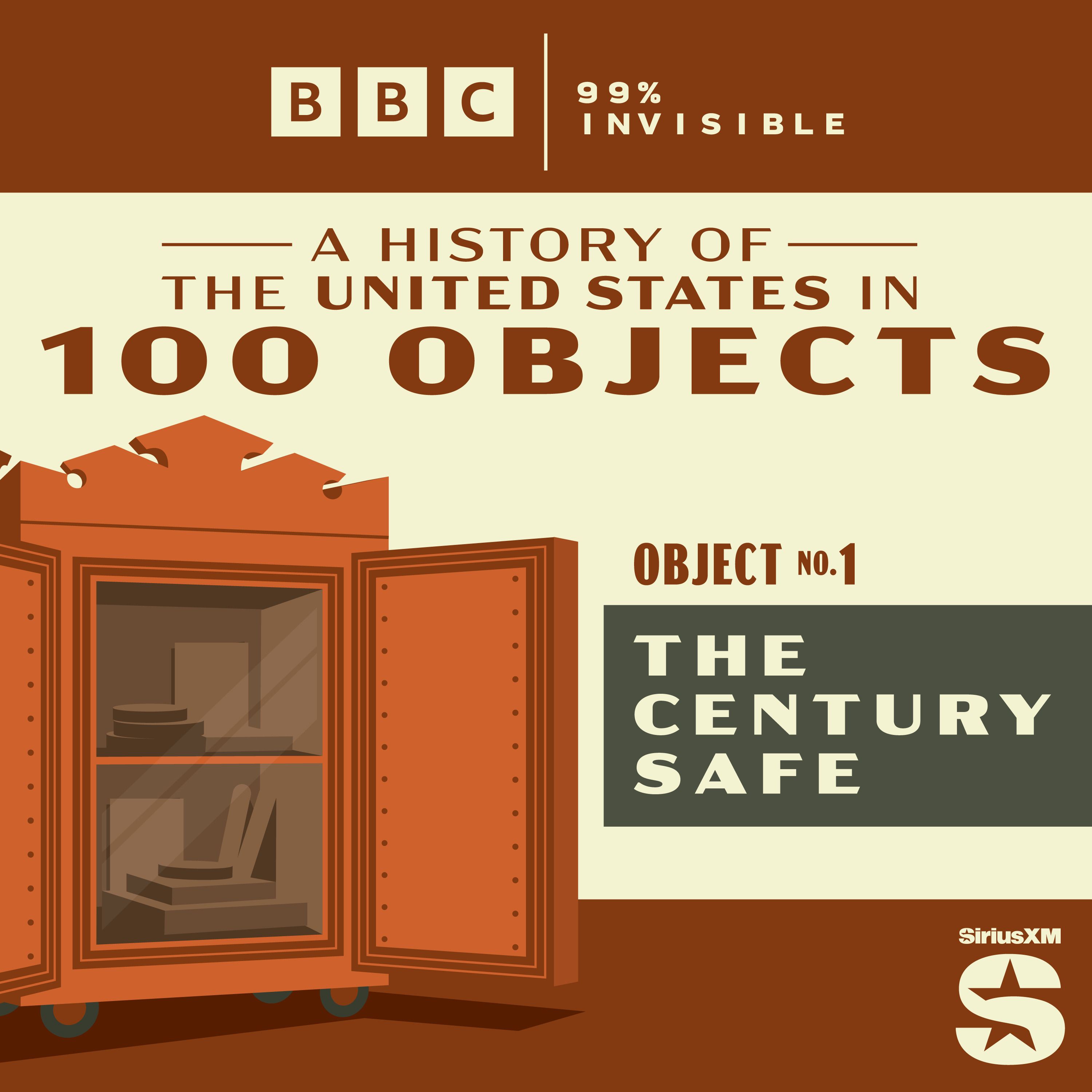
Overview of 100 Objects #1: The Century Safe
Roman Mars opens the new 99% Invisible/BBC series A History of the United States in 100 Objects by telling the story of the Century Safe—a massive time capsule created for America’s 1876 Centennial and opened, fittingly, 100 years later during the 1976 Bicentennial. With historian Jill Lepore, the episode uses the safe to explore how nations try to package identity, why historical artifacts often disappoint, and what the surviving record says about power, memory, and who gets remembered.
The Century Safe: America’s Original Time Capsule
Created for the 1876 Centennial
- The Century Safe was built for the Philadelphia Centennial Exposition in 1876.
- It was designed as a literal message to the future: fill it with objects from the present and open it in 1976.
- The safe was commissioned by Anna Deihm (a magazine publisher and Civil War widow) as both a publicity stunt and a serious symbolic gesture.
The World's Fair backdrop
- The 1876 exposition showcased the era’s dazzling innovations:
- Alexander Graham Bell’s telephone prototype
- Heinz ketchup
- typewriters, sewing machines, engines, and other industrial marvels
- It reflected a country obsessed less with democracy than with industrial progress, expansion, and modernity.
Why it mattered
- The safe captured a new way of thinking:
- about preserving the past
- about imagining a future audience
- and about what objects might stand in for a nation’s identity
Opening the Safe in 1976
The bicentennial context
- By 1976, the U.S. was deeply divided:
- still recovering from Vietnam
- reeling from Watergate and Nixon’s resignation
- experiencing distrust in government
- Gerald Ford made the bicentennial opening a symbolic attempt at national healing.
The forgotten key
- For years, people had forgotten where the key was.
- A newspaper story rediscovered the safe, and eventually a descendant of Anna Deihm’s family produced the key.
- The safe was brought to the Capitol and opened with much ceremony.
What was inside
The contents were underwhelming to modern eyes:
- photographs
- an autograph book
- a temperance pamphlet
- a book listing government workers
- a picture of Anna Deihm’s family physician
- an inkwell said to have belonged to Henry Wadsworth Longfellow
- a group photo of the 44th Congress
Why the Contents Felt Disappointing
The safe preserved novelty, not significance
Jill Lepore argues that the safe was more a monument to preservation itself than to carefully chosen meaning.
Many objects lost their power over time
- The items were once exciting because they represented:
- the newness of photography
- the power of records
- the idea that the present could be physically sealed away
- But after 100 years, they mostly looked like:
- ordinary
- dull
- or even meaningless artifacts
Yet the objects still reveal history
Lepore points out that even “boring” objects can be rich with meaning:
- the temperance pamphlet points to a major political movement that would eventually shape constitutional change
- the photo of the 44th Congress shows a fleeting moment of Black political representation during Reconstruction
- Longfellow’s inkwell connects to grief, mourning, and national literature
Main Themes and Takeaways
1. History is not a neat archive
- The past is not equally preserved.
- Wealthy, literate, powerful people leave the most records.
- The poor and marginalized often leave the least evidence behind.
2. Objects can still tell big stories
- Even mundane artifacts can reveal:
- social movements
- political transitions
- national anxieties
- private grief
- The challenge is not finding “perfect” objects, but reading surviving ones carefully.
3. The project is about the present, not just the past
- Mars makes clear that this series is not a perfect official archive.
- It’s an attempt to tell the story of America through objects that help us understand who we are now.
Notable Insight
- Lepore’s central warning: the historical record is asymmetrical.
- Her point is that history should not pretend to be comprehensive; instead, it must actively try to recover the lives and experiences that survived unevenly.
Series Setup and Call to Action
The goal of the new series
- A History of the United States in 100 Objects will explore American history through objects, stories, and artifacts.
- The show invites listeners to help shape the collection.
Listener invitation
- Mars asks listeners to:
- look through attics
- think about family histories
- and suggest objects that tell a larger story of America
- Contact: 100objects@99pi.org
Bottom Line
The Century Safe episode is less about the safe’s disappointing contents than about the bigger question it raises: what does it mean to preserve a nation in objects? The answer, Mars and Lepore suggest, is that no object can represent America perfectly—but ordinary things, if read carefully, can still reveal the country’s ambitions, contradictions, and unfinished history.